Sedes Sapientiae
Puster Valley, c. 1220/30
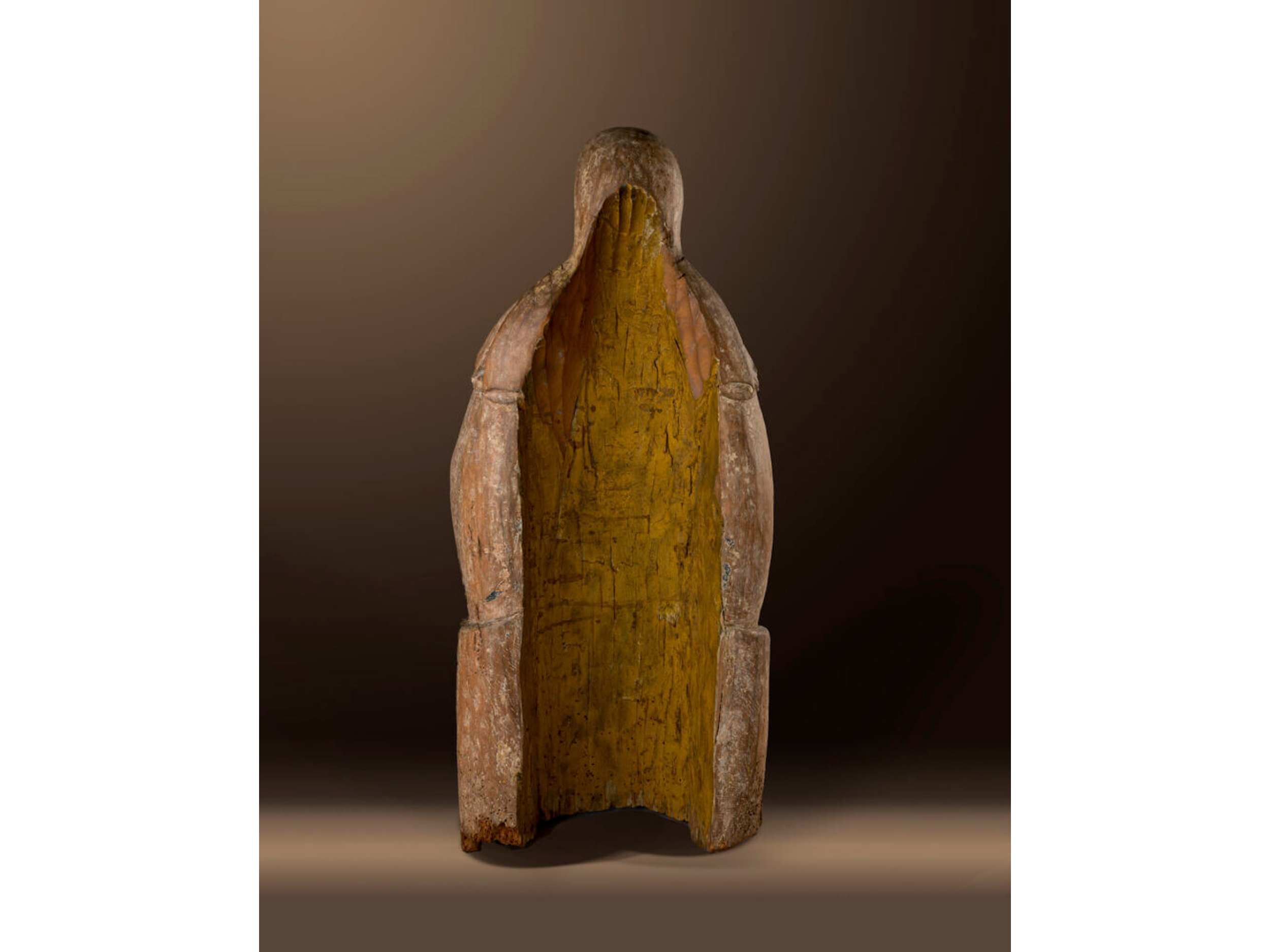
Carved from softwood/linden wood(?)
Traces of original polychromy
Height 57 cm
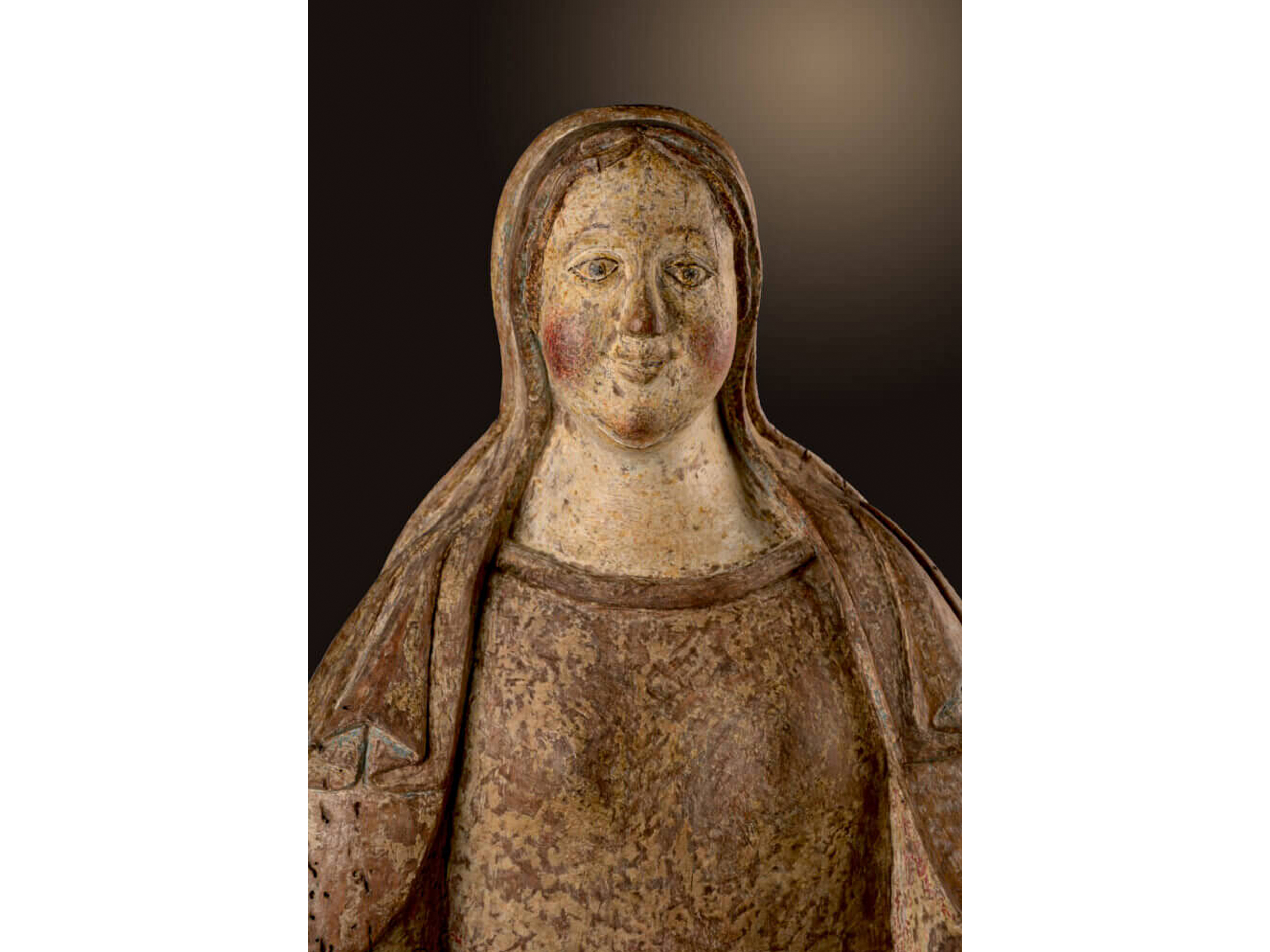
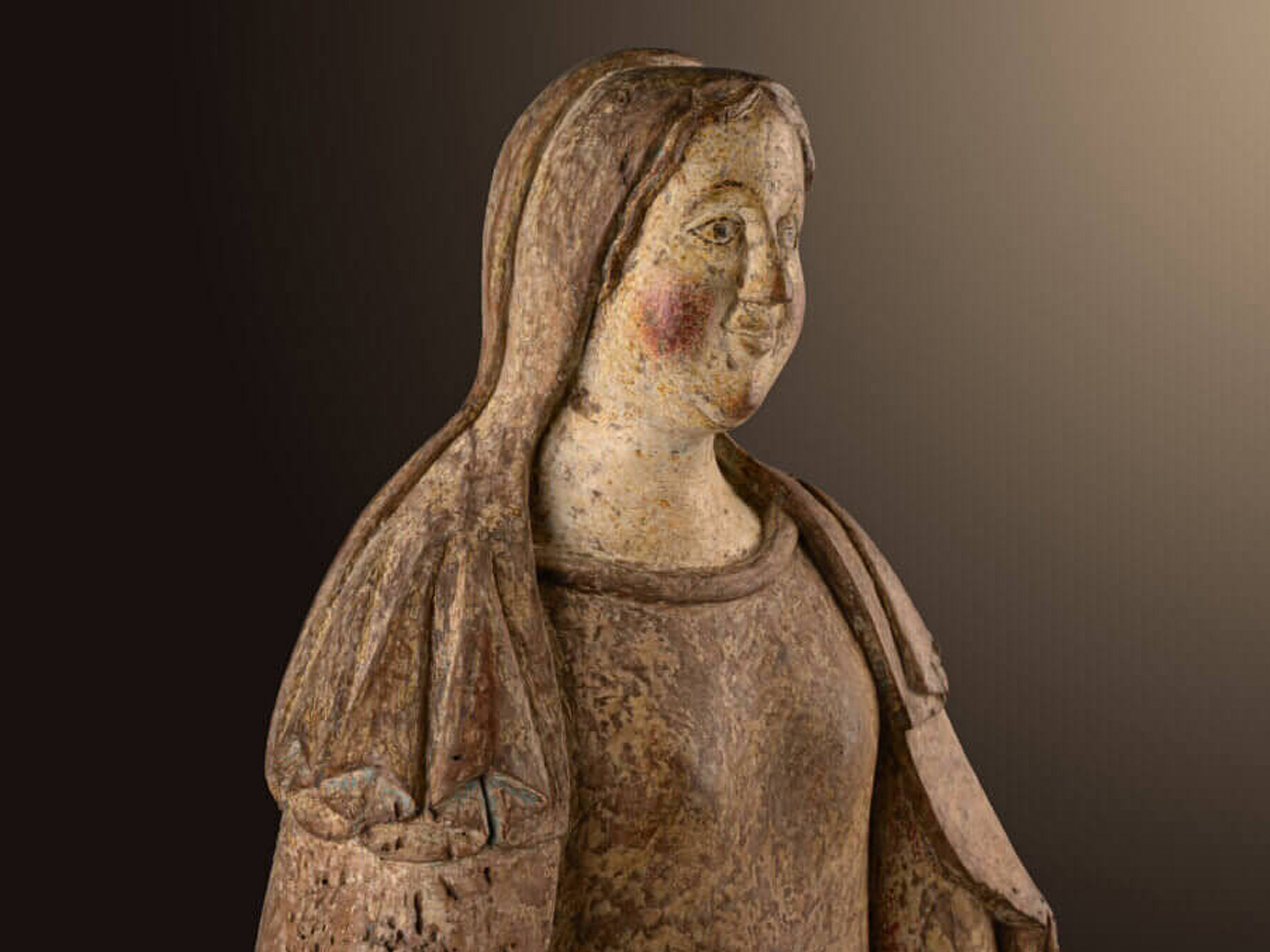
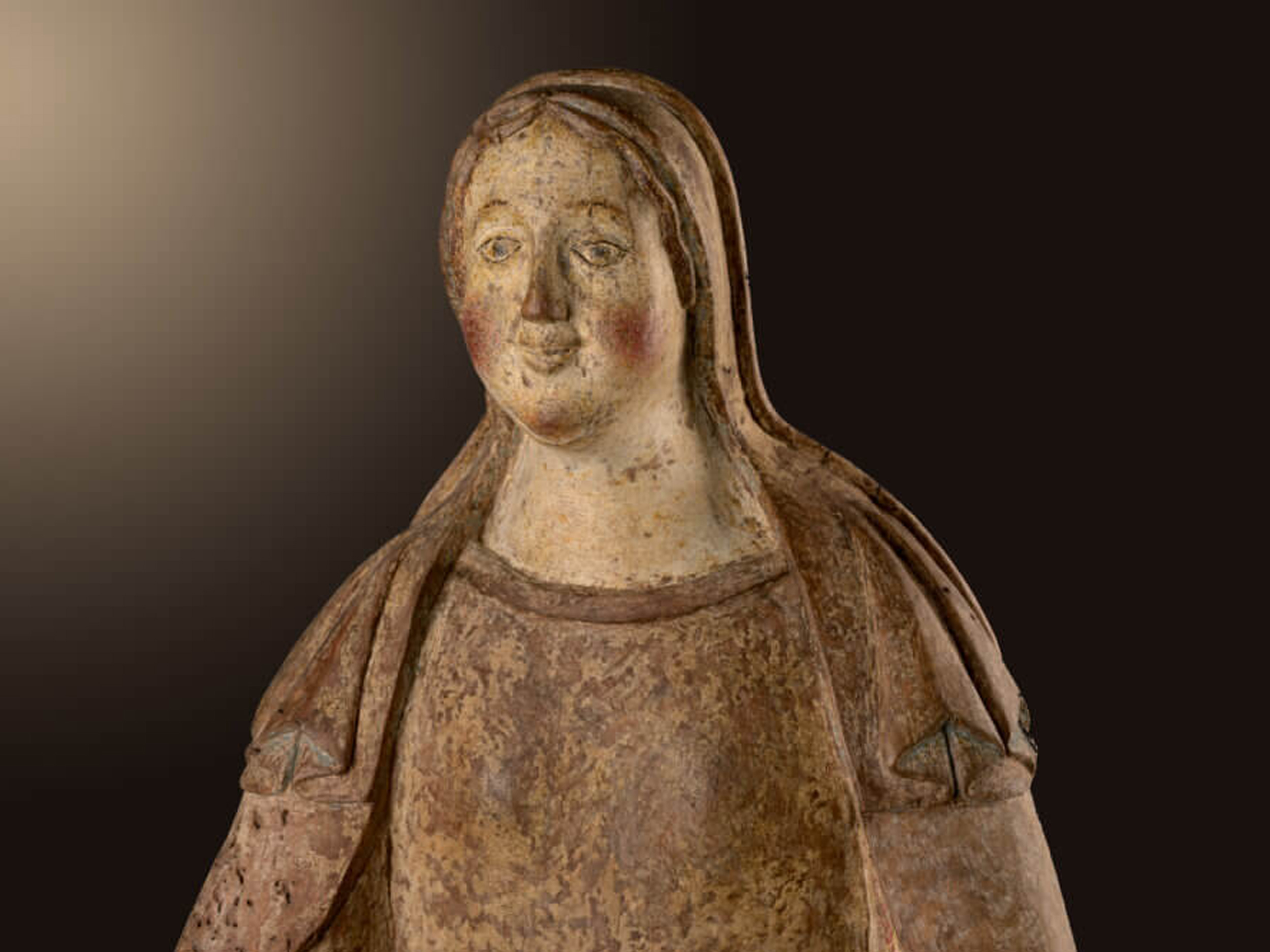
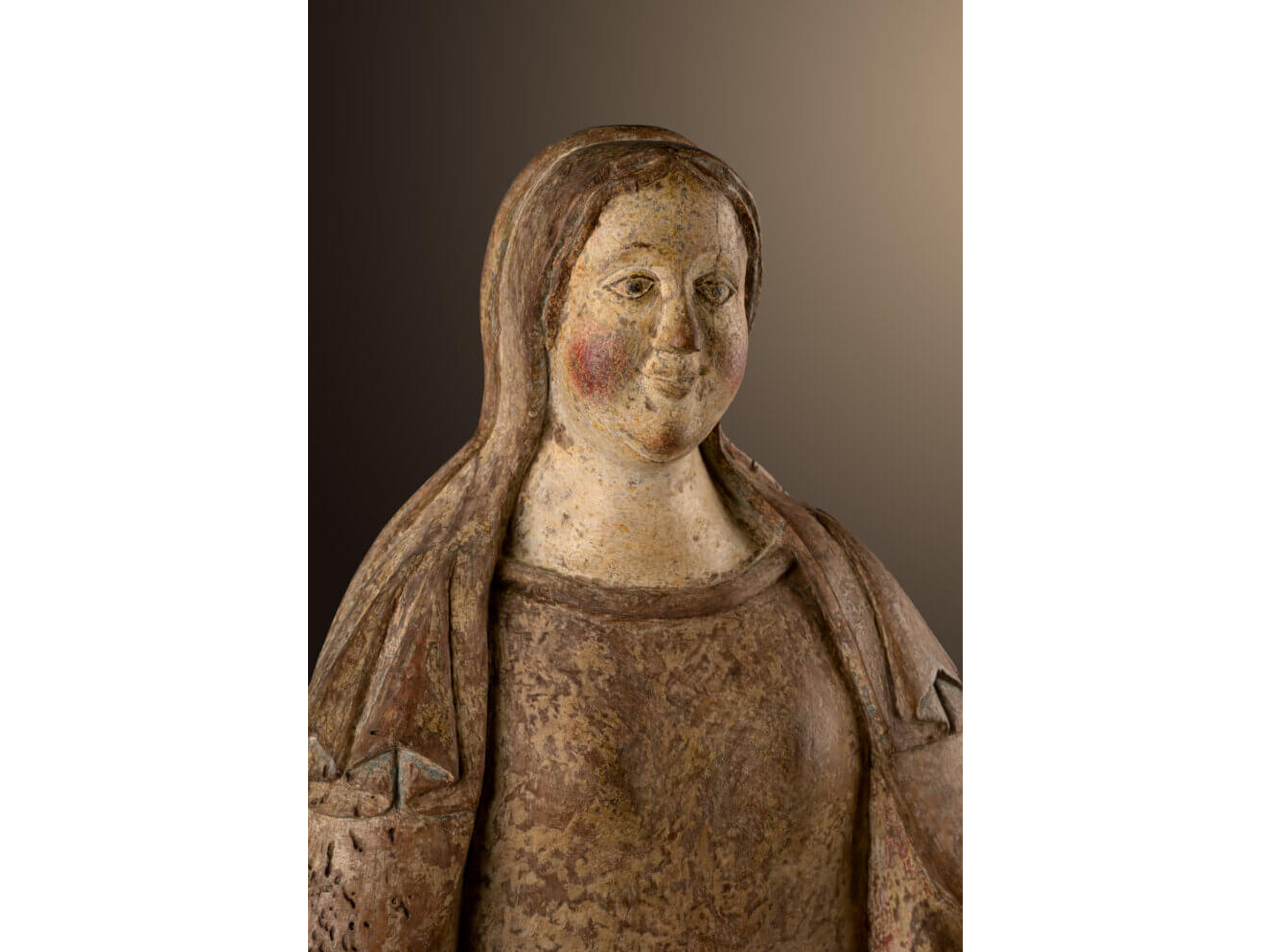
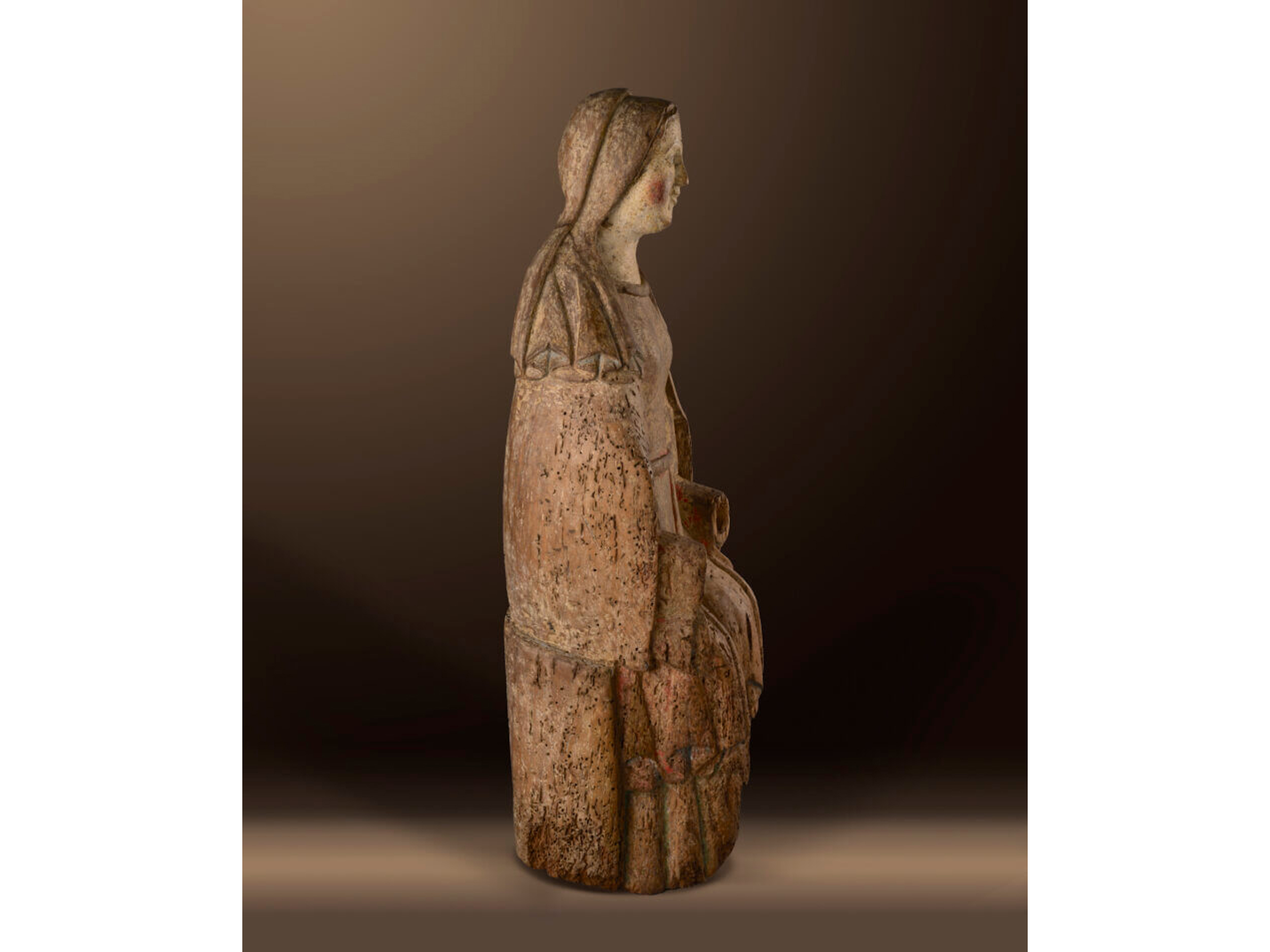
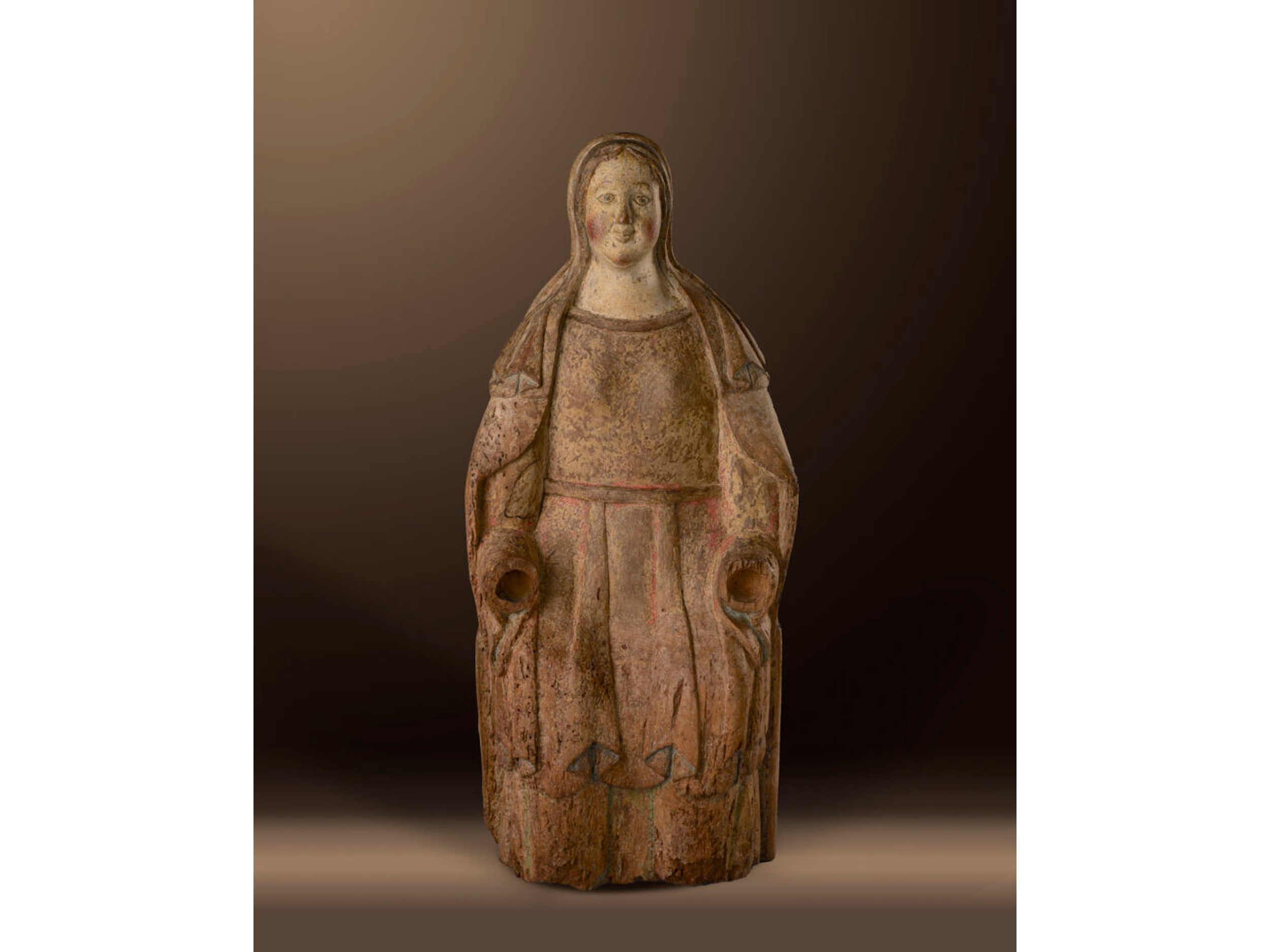
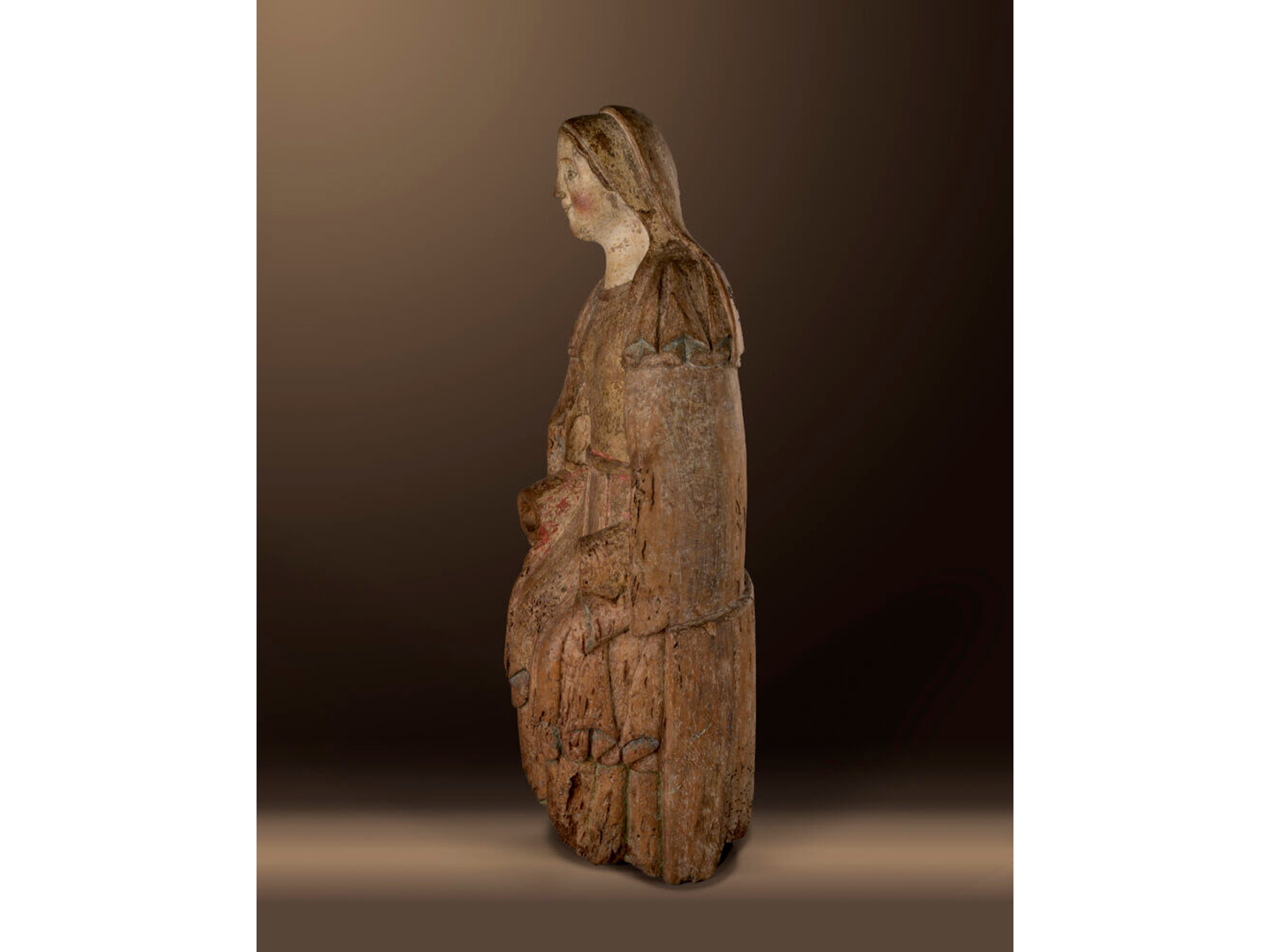
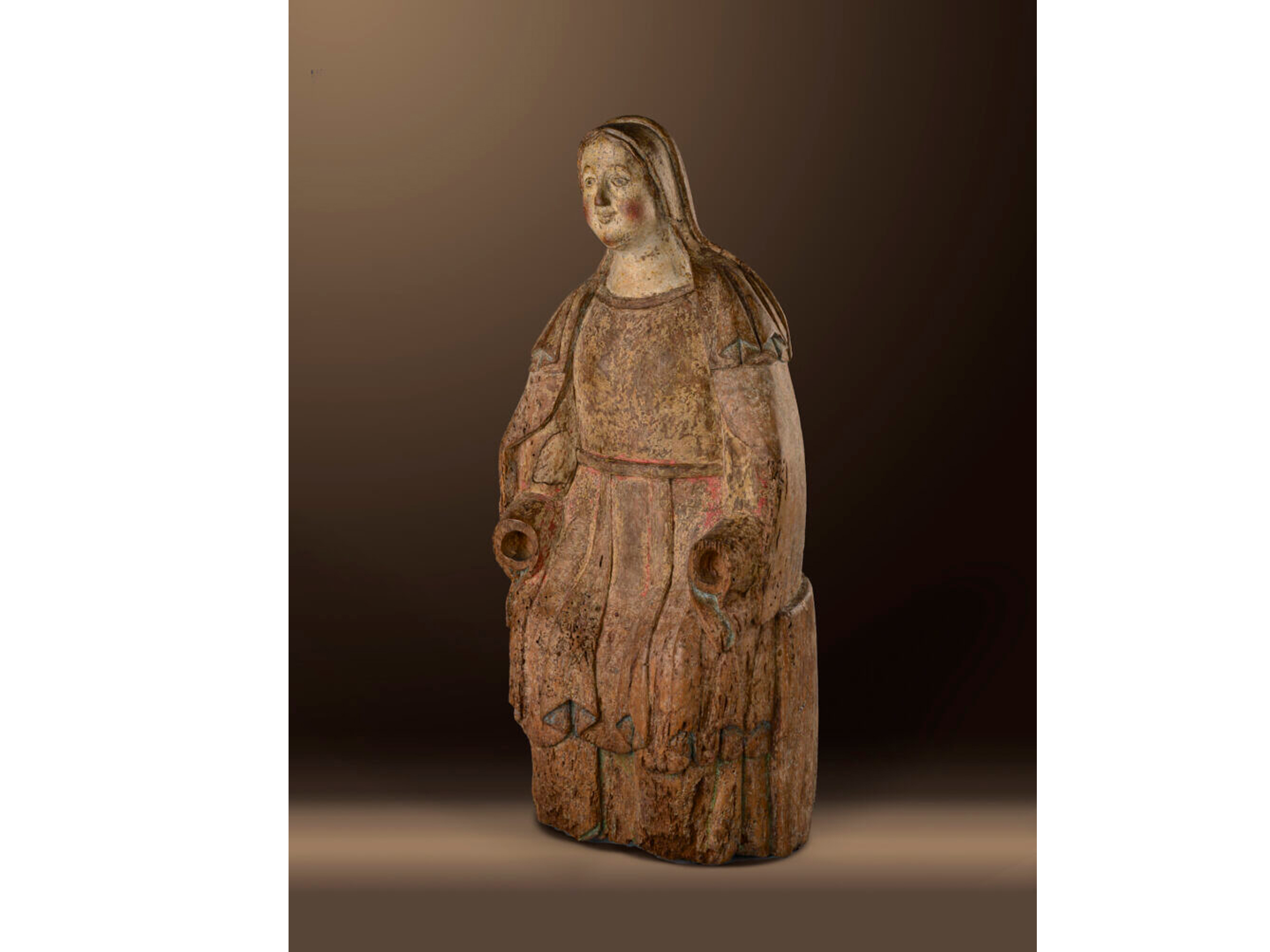
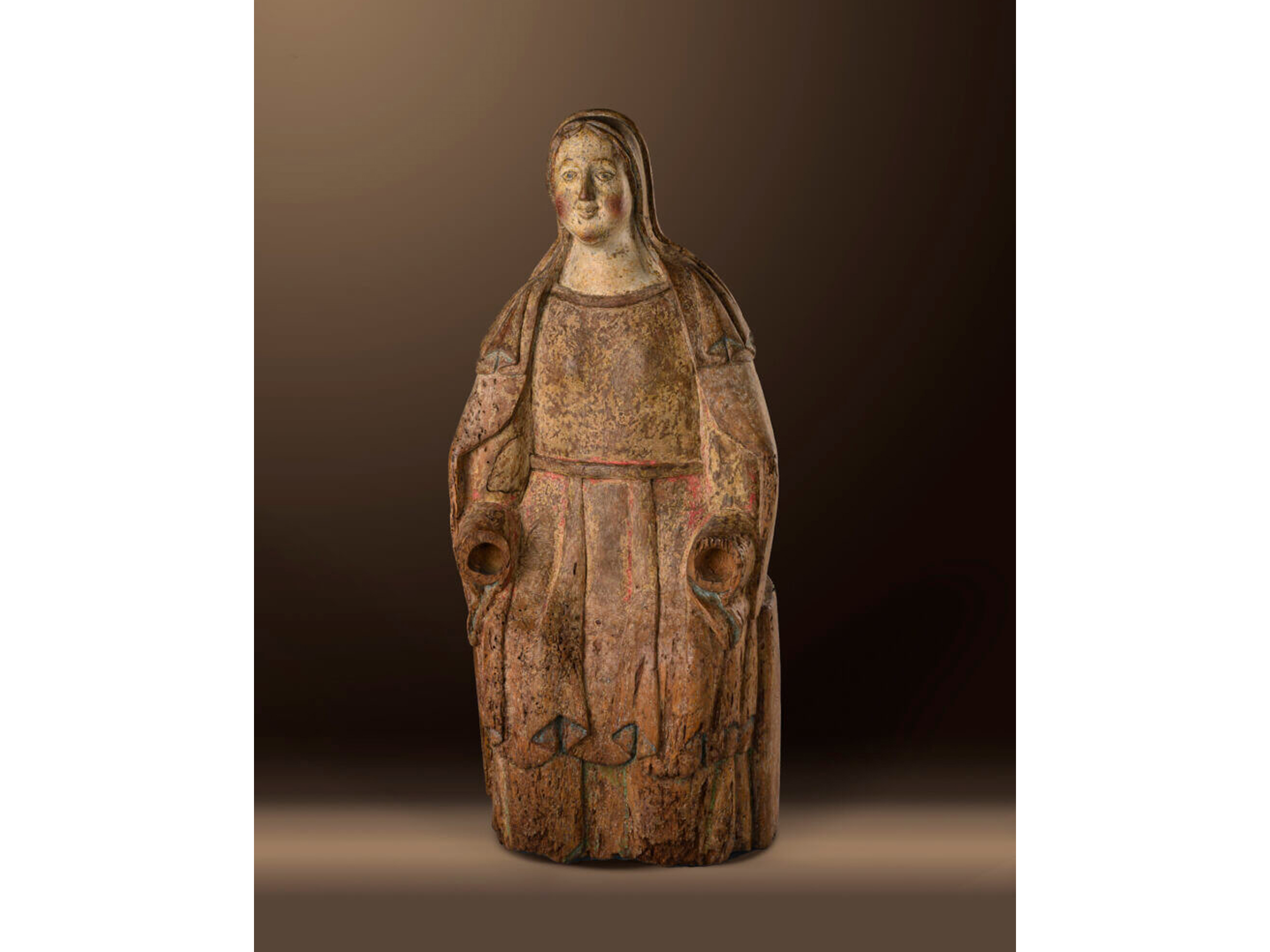
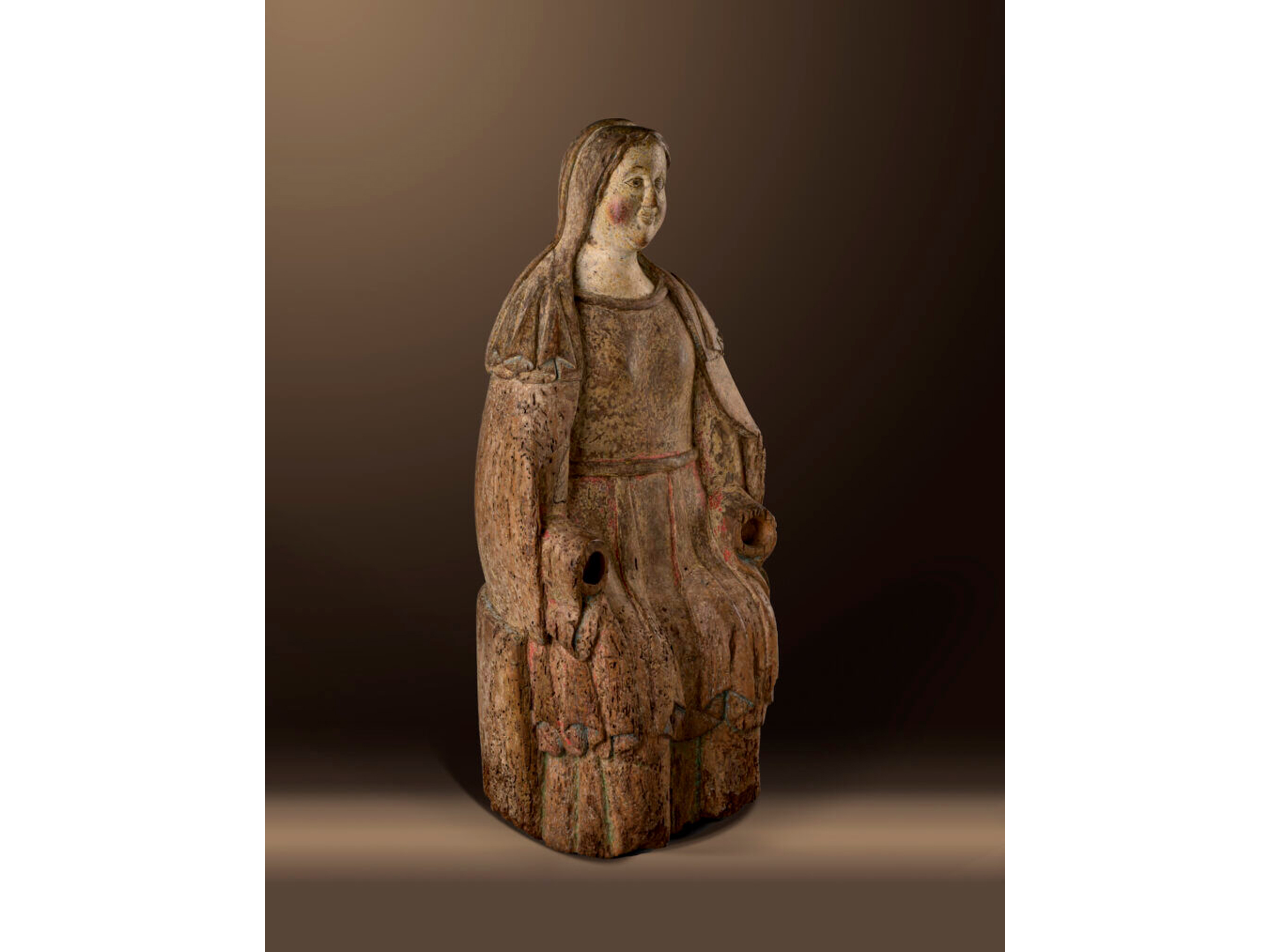
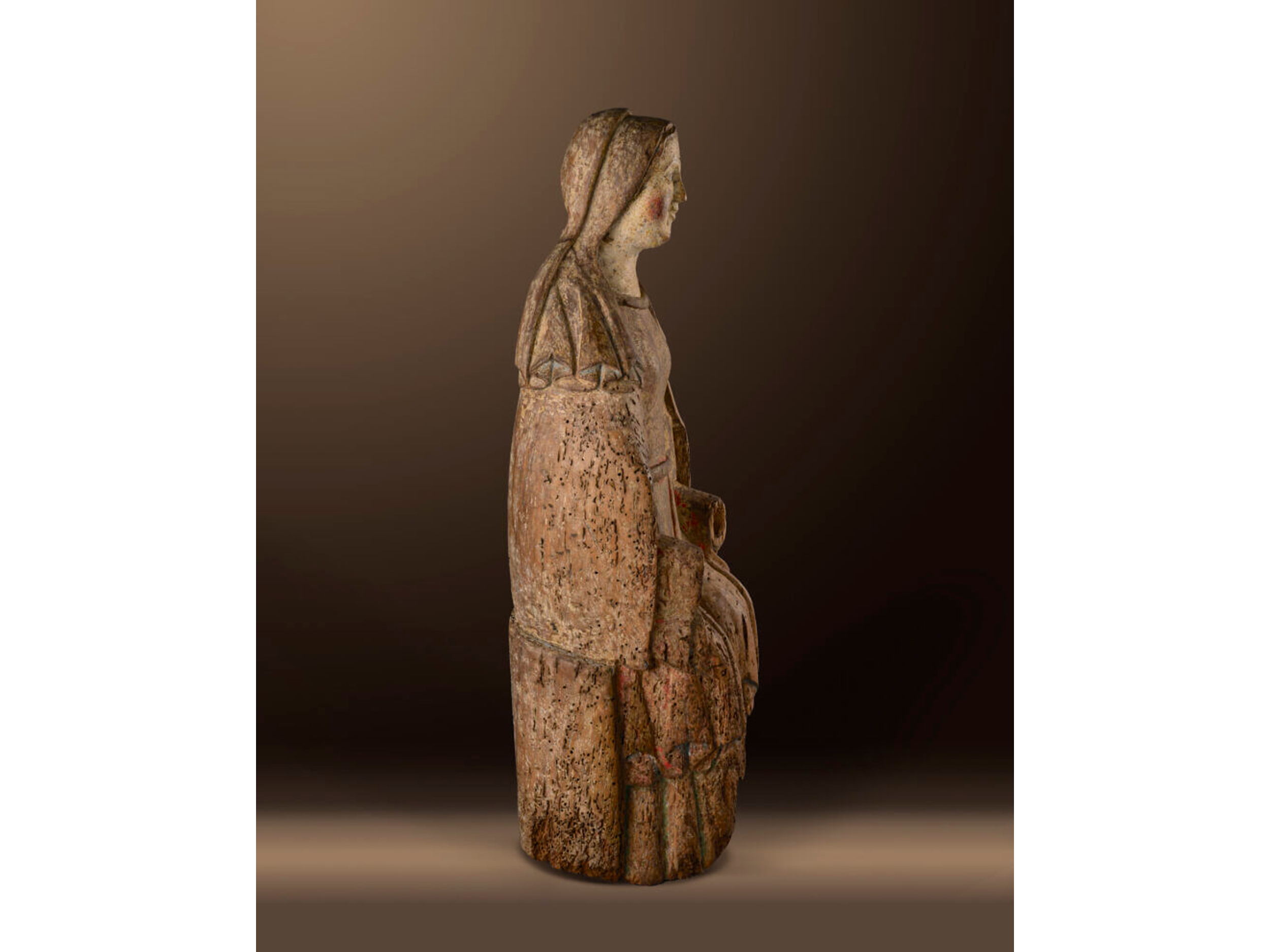
This depiction of the Madonna is a masterful, early sculpture in magnificent condition. The Madonna corresponds to the “Sedes Sapientiae” type: Mary as the throne of divine wisdom. She sits in a block-like, frontal pose with an open posture on a rounded throne. The figure is symmetrically conceived in its execution; the meticulous frontal orientation clearly indicates the early date of this impressive depiction. Her face is sculpted with vivid expressiveness, featuring high eyebrows, large and wide-open eyes, and deeply creased upper eyelids. The empathetic expression is emphasized by the prominent nose, which blends seamlessly into the sharp ridges of the eyebrows. Mary’s full lips curve upward, revealing slight dimples. Her rosy cheeks convey a sense of vitality, which emphasizes Mary’s role as a mediator, communicating directly with the viewers here.
The carefully rendered surfaces suggest the drapery in low relief, as was typical for the early 13th century. Mary’s veil is draped smoothly over her head and flows down over her shoulders to her upper arms. There, the hems billow in an almost ornamental triangular pattern. While her robe falls in straight lines down her upper body, it lies in a similarly plump and geometrically conceived style below her knees. The strong symmetry in the composition enhances the ornamental quality of the fabric—even without any painted or carved surface ornamentation!—and creates a fascinating contrast to the otherwise flat-rendered sections of her clothing. As a result, her clothing takes on a luxurious expressiveness and appears to resemble a brocade fabric with dense trim.
Traces of polychromy have been preserved along the crease lines and notched grooves, indicating that the Madonna’s outer robe was painted red, its inner side blue, and the underrobe green. These colors carry deep symbolic meaning: Blue, the divine color associated with the heavens, was regarded from the 12th century onward as the color of chastity and thus, in particular, as the color of Mary, who from that time onward was frequently depicted wearing a blue cloak over a red dress. Red, meanwhile, is an expression of symbolic authority, a tradition inherited from late antiquity. It is also often regarded as the color of martyrdom. The green here could symbolize love and hope.
Bibliography:
Ilene H. Forsyth, *The Throne of Wisdom: Wood Sculptures of the Madonna in Romanesque France*, Princeton 1972.
Additional information
Buy order
I hereby place a purchase order for the exhibit listed below at the purchase price stated below.
Login
Login
Was wollen Sie verkaufen?
Bid form
With this purchase order, I authorize TIBERIUS AUCTIONS to bid in my name and on my account up to the specified purchase limits or to contact me for a telephone bid during the auction.
You must be logged in to place bids!
tiberius newsletter
Subscribe to our newsletter to be informed about upcoming auctions.