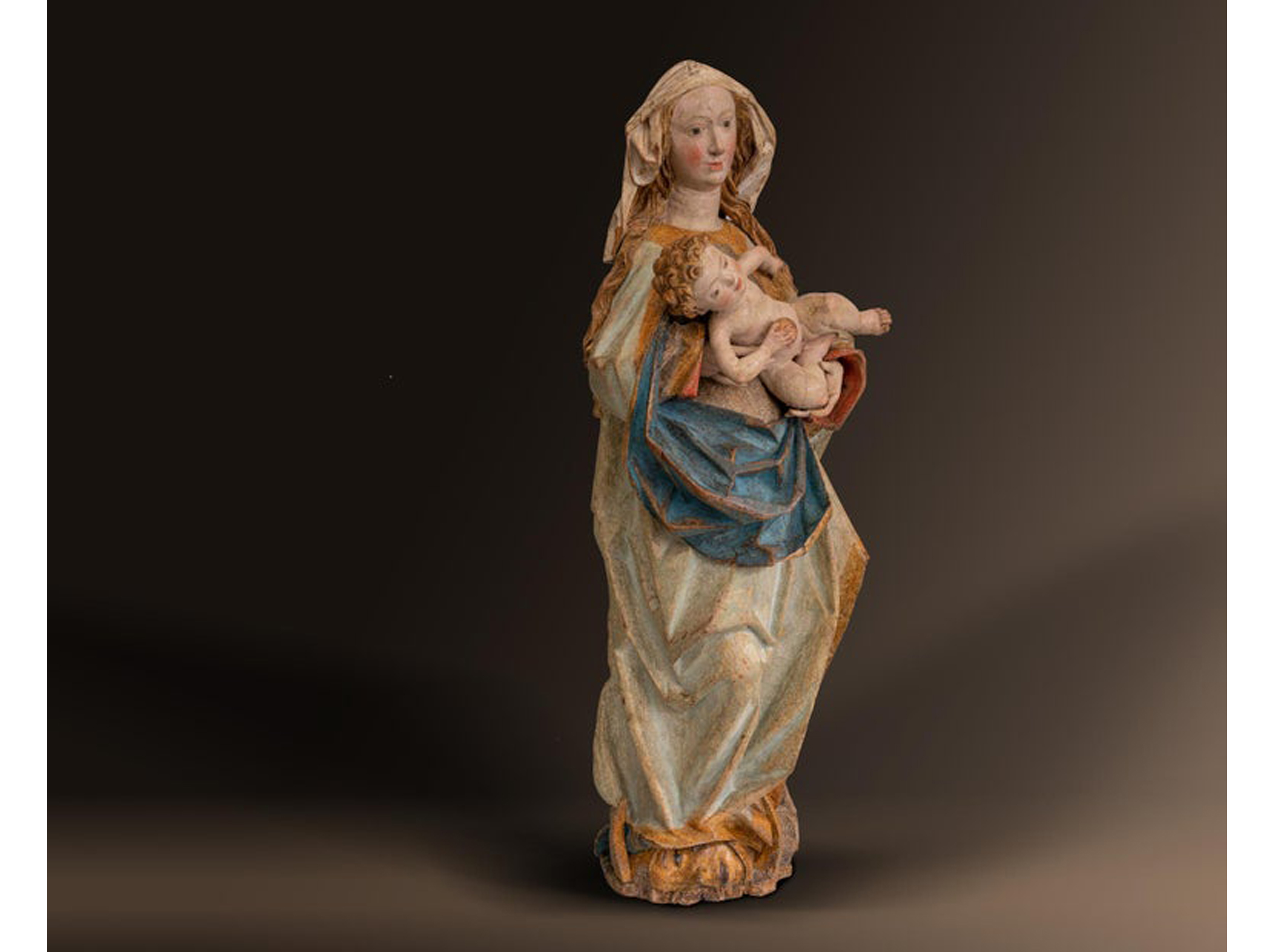
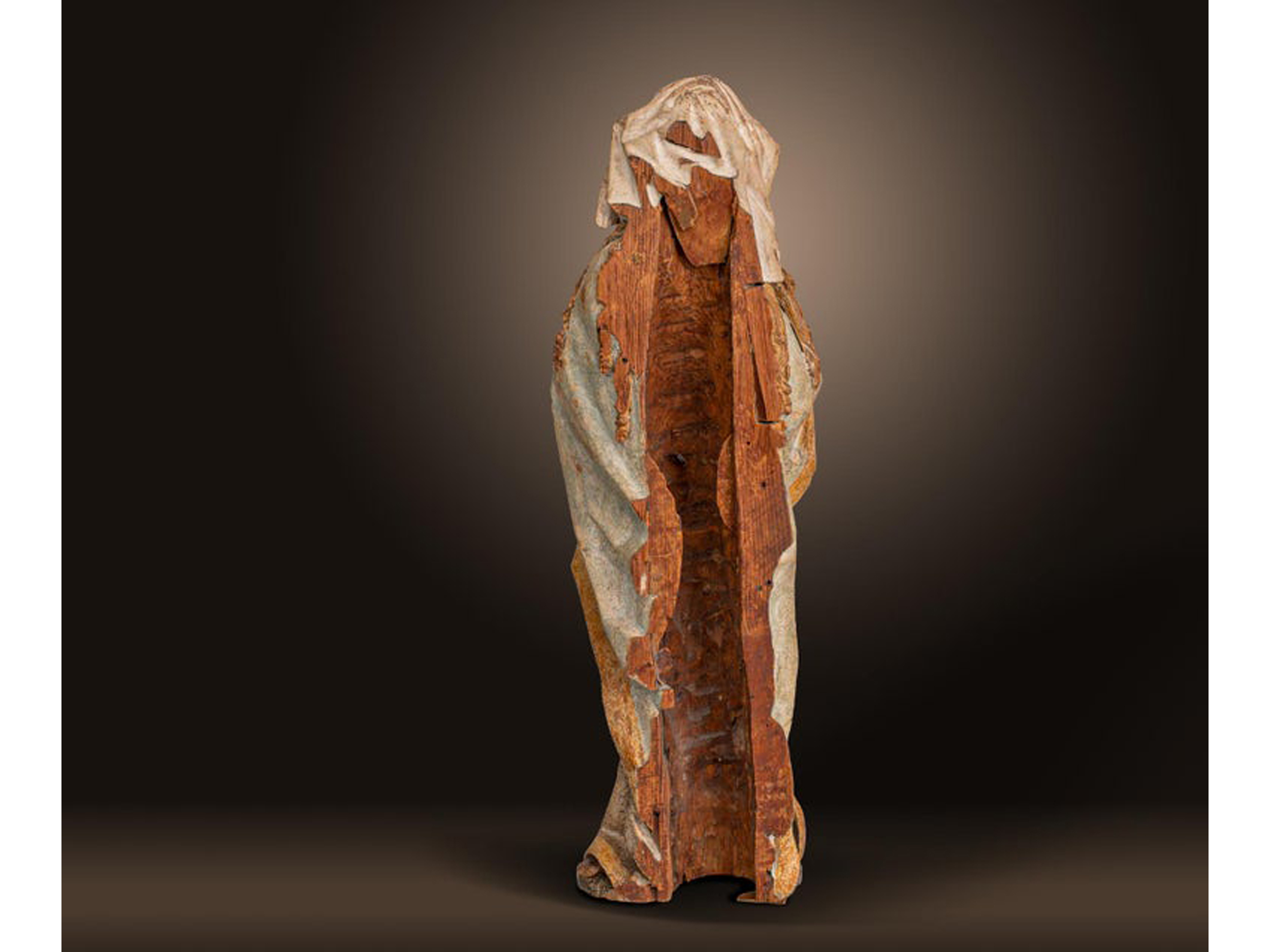
Crescent Moon Madonna
Workshop of Master
Hans Klocker
before 1474, possibly in Gais—after 1500
“Crescent Moon Madonna”
c. 1480/90
Carved from Swiss stone pine
Original polychromy
Height 77 cm
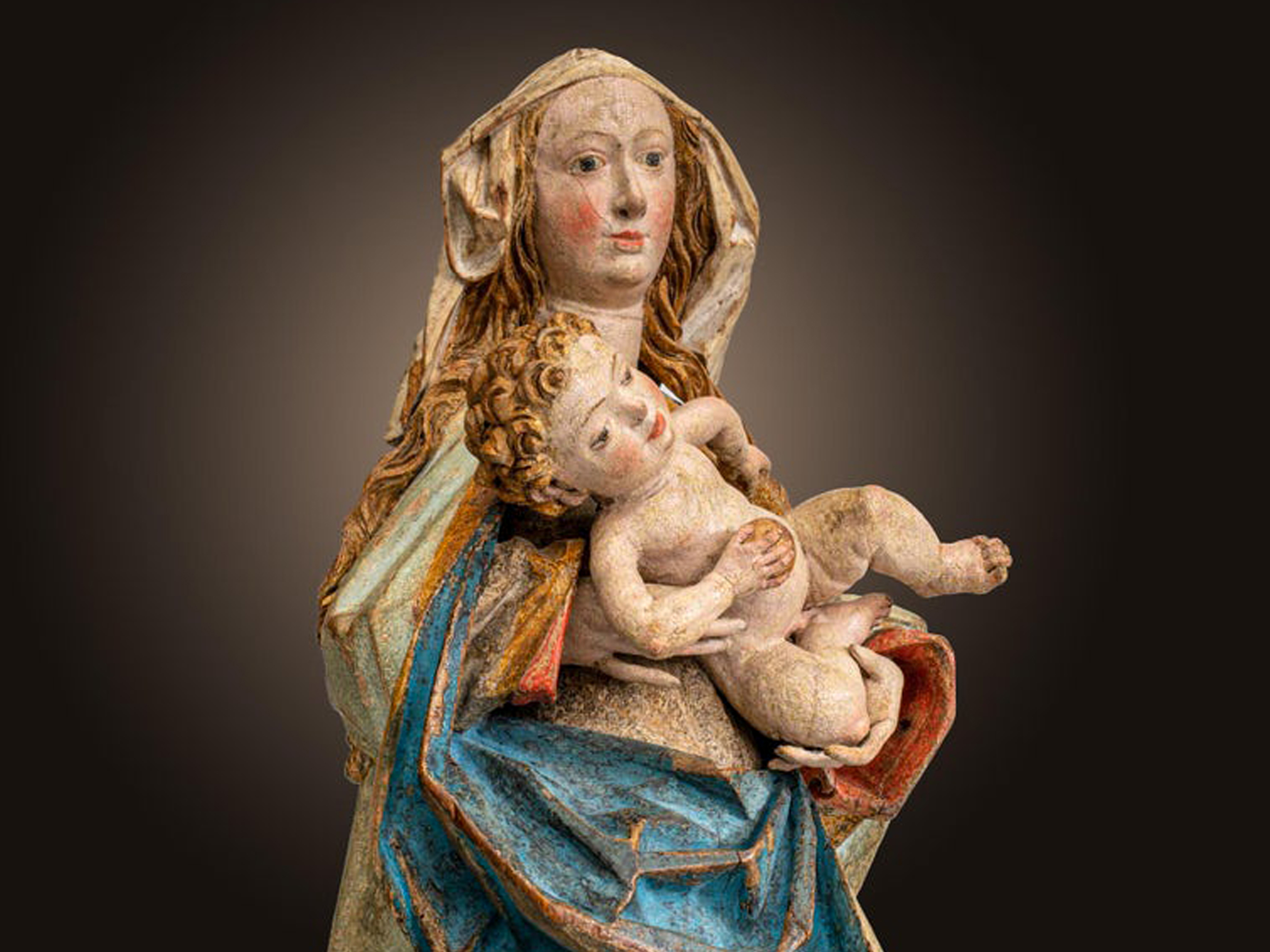
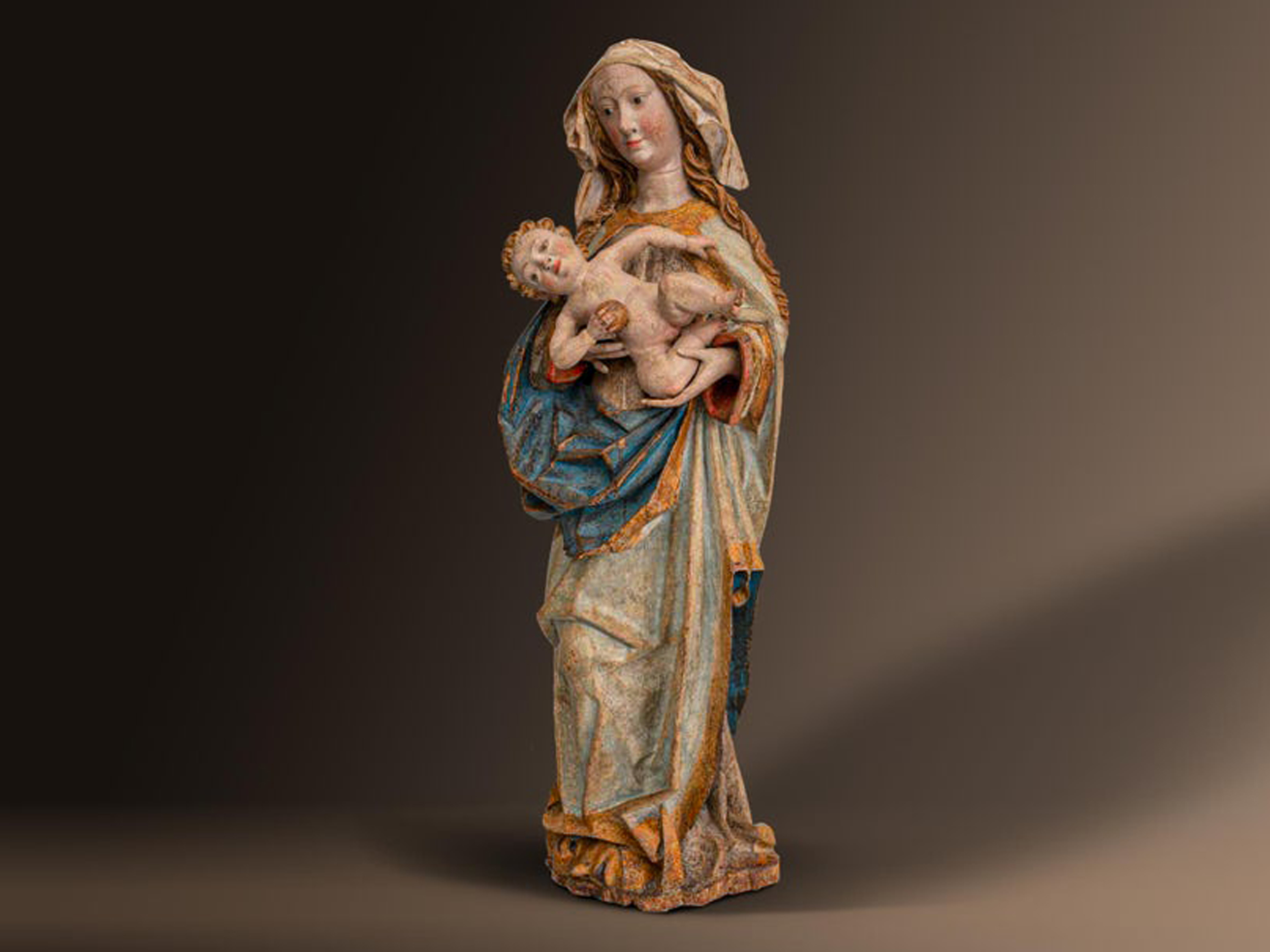
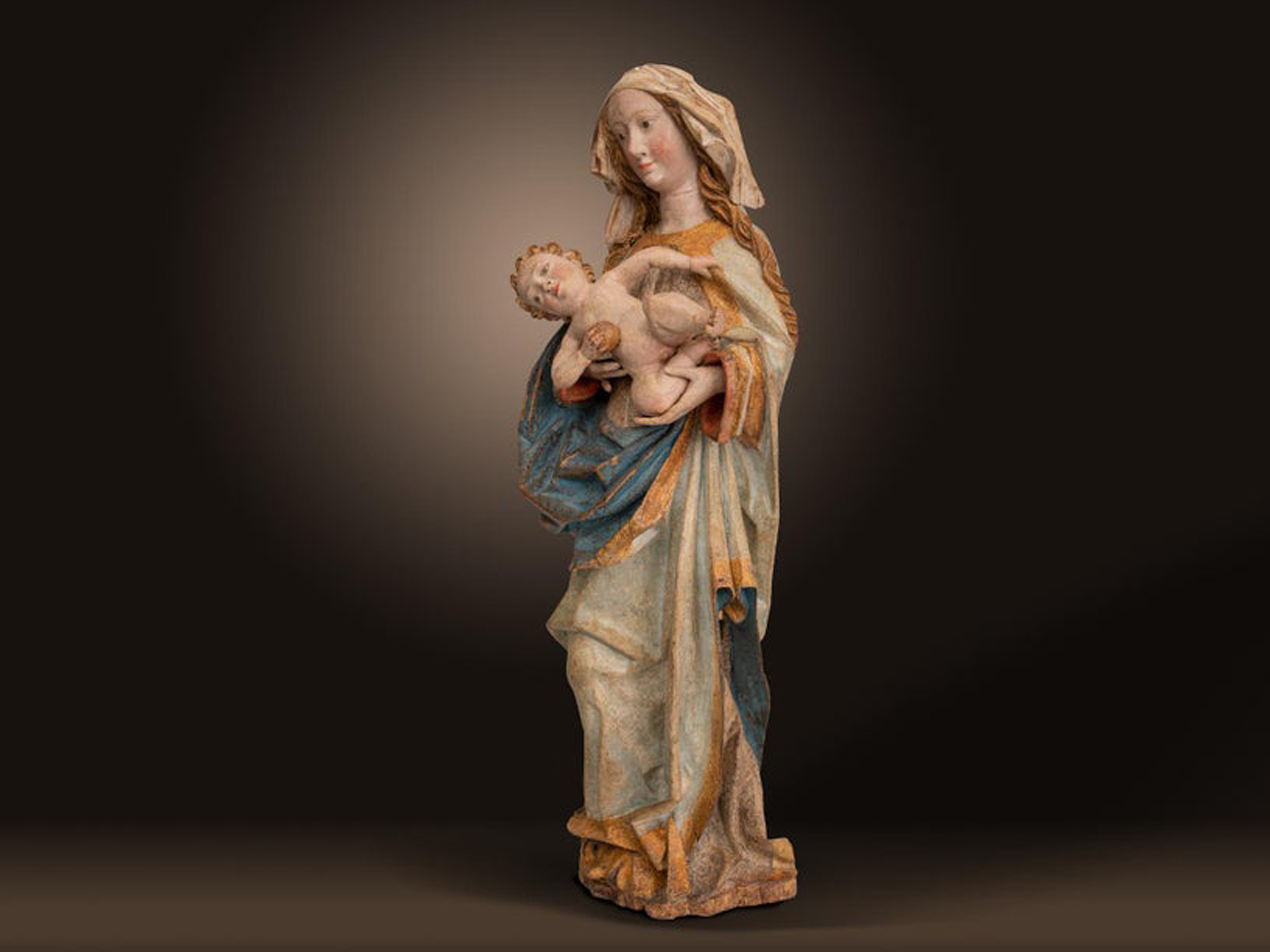
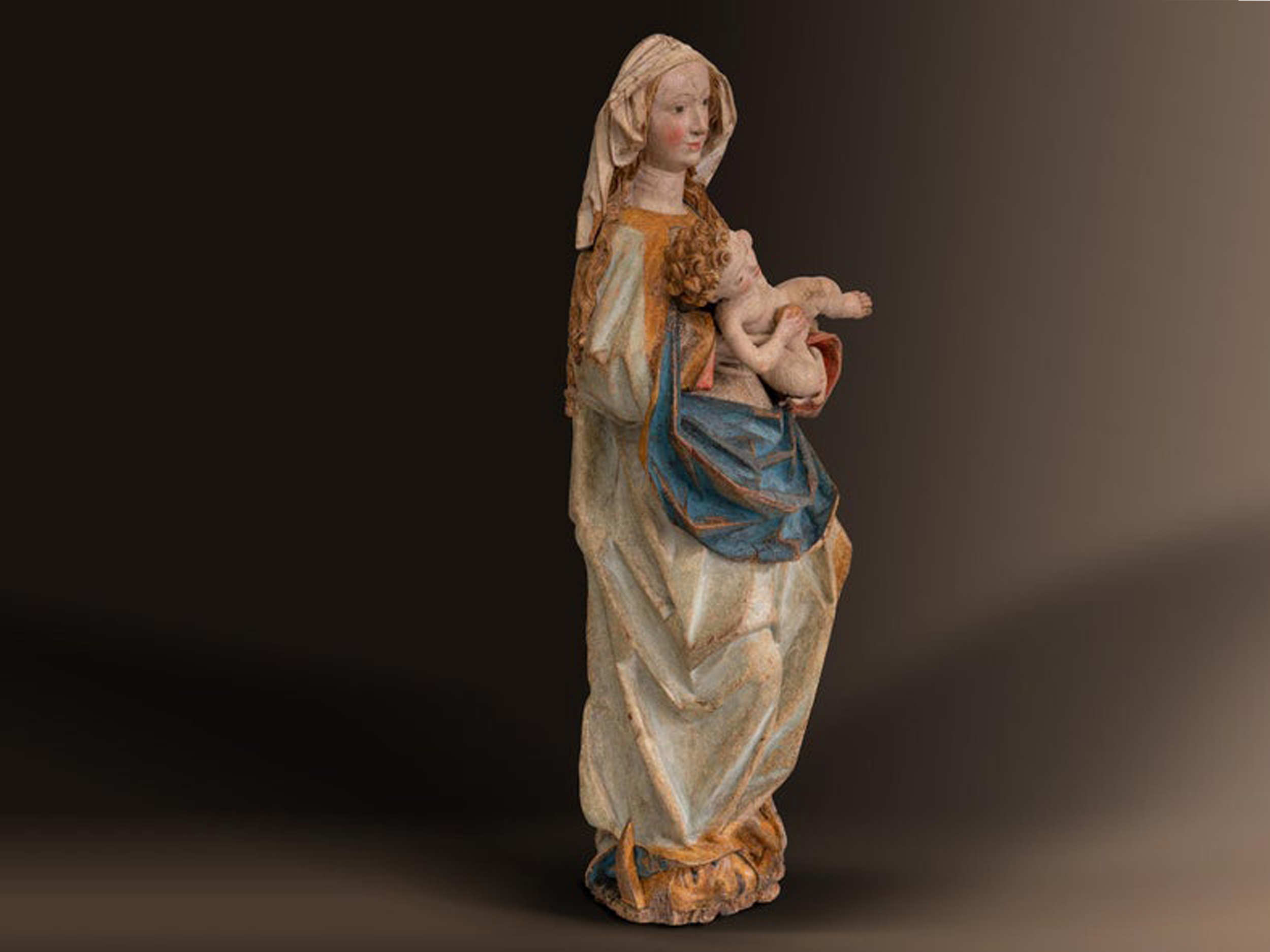
This exceptionally high-quality Madonna figure (77 cm) carved from Swiss stone pine exhibits typical characteristics of the major workshop of the late-Gothic sculptor Hans Klocker. The Tyrolean woodcarver was primarily active in the Brixen and Bolzano regions. He is one of South Tyrol’s most significant artists of the late 15th century. Stylistically, this Madonna is related to the well-known Tramin Altar (1485–90) in the Bavarian National Museum and exhibits an extremely similar level of quality in its carving.
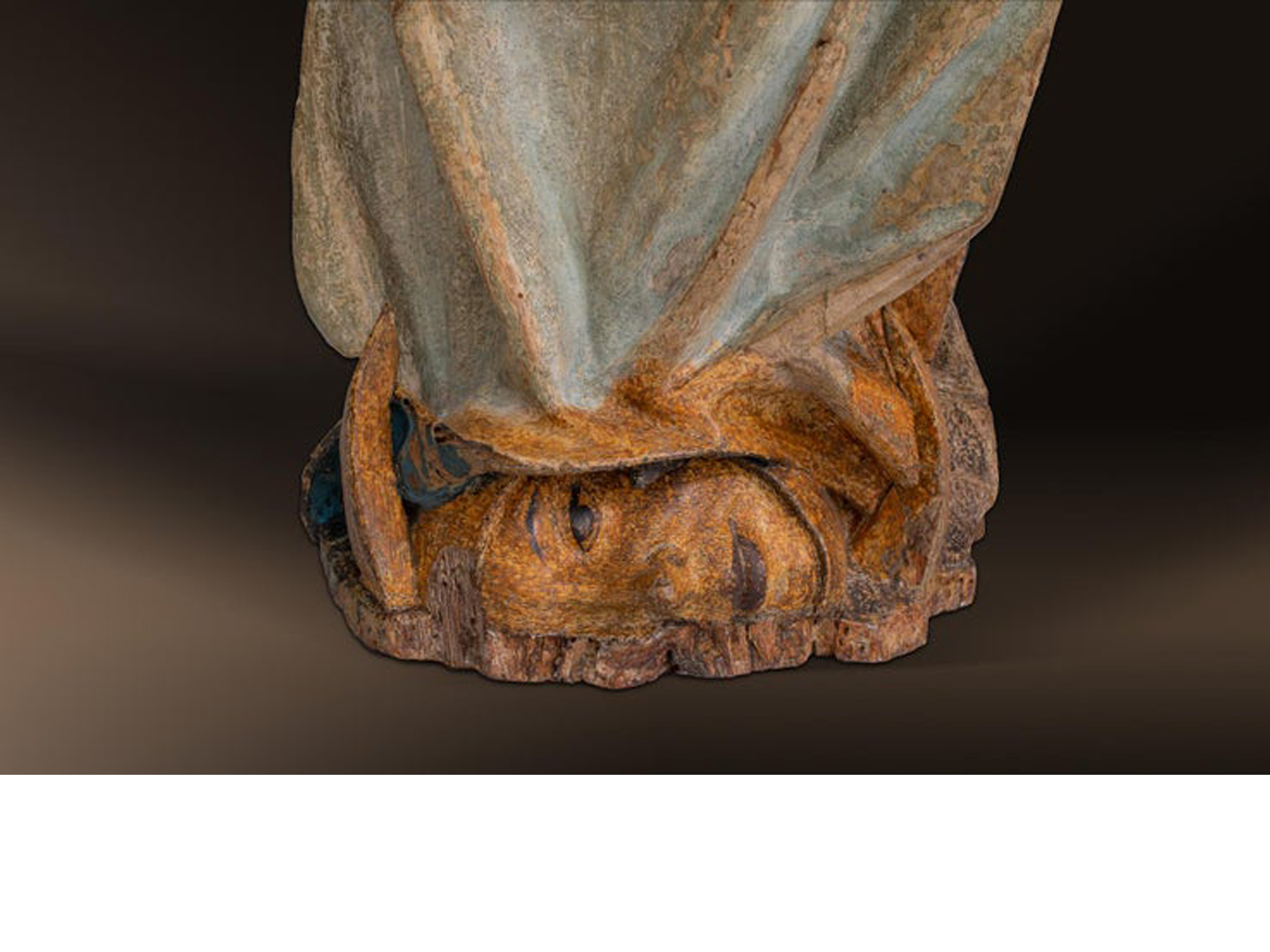
Klocker’s oeuvre is characterized by block-like, solidly formed figures and detailed realism. Mary’s subtly posed figure is rendered particularly dynamic and majestic by the voluminous, creased folds of her outer robe’s drapery. The masterful rendering of the drapery is characteristic of this Austrian late-Gothic woodcarver, who drew inspiration from Hans Multscher and Michael Pacher. Particularly noteworthy is the “wrapped” fold above the knee of the right foot, which rests on the crescent moon. The figures on the wing reliefs of the Tramin Altar are especially comparable:
https://www.bayerisches-nationalmuseum.de/webgos/bnm_online.php?seite=5&fld_0=00024254.
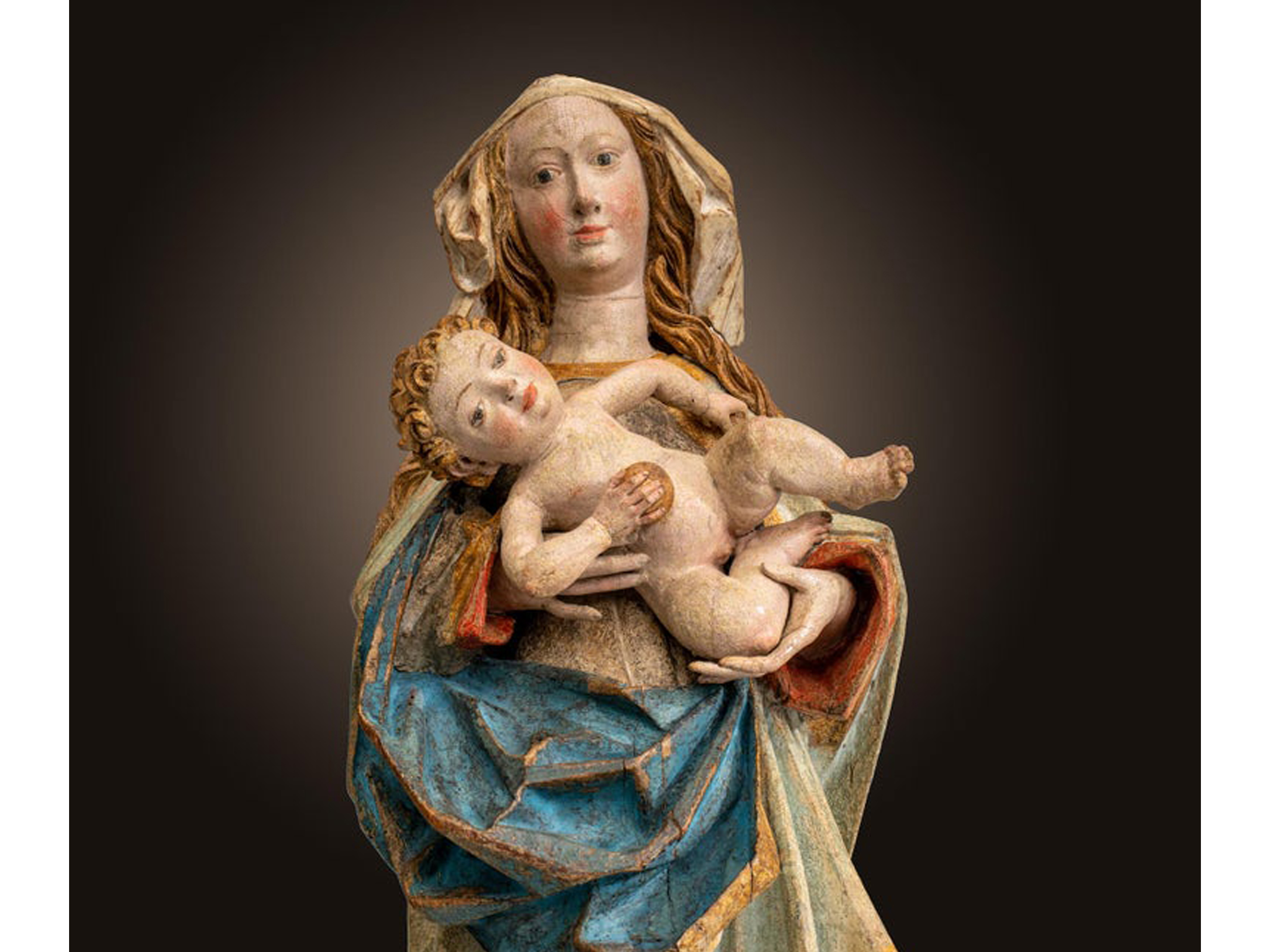
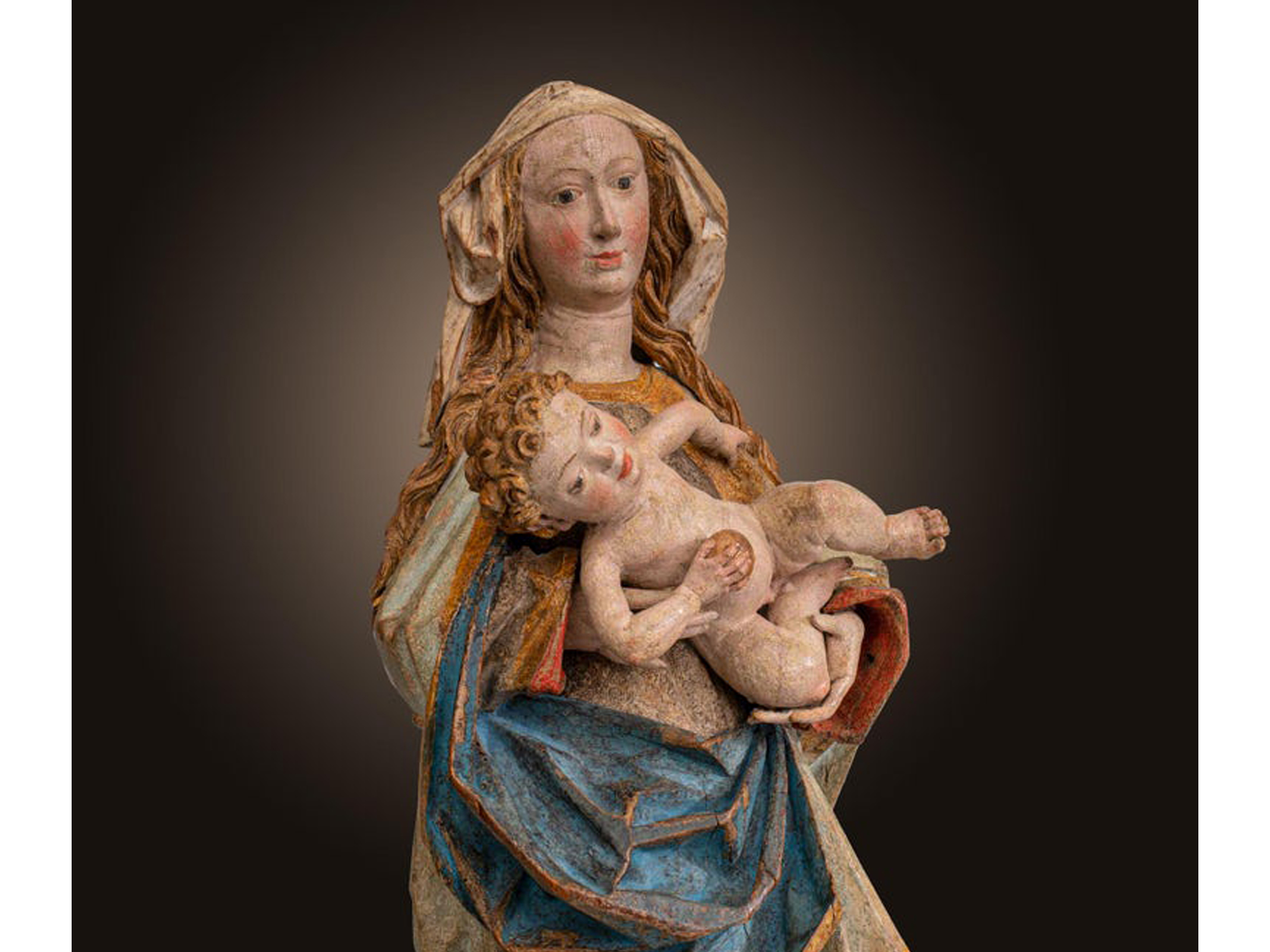
The wide, turned-in inner edge of the cloak also features angular bowl folds, creating a dynamic contrast to the veil draped over the head—a motif frequently seen in Klocker’s figures. Beneath it, long locks of hair resting on the shoulders stand out, carved in a typical late-Gothic style. Also noteworthy is the crescent-shaped face with a large nose, high cheekbones, and full lips.
The naked infant Jesus, whom Mary seems to be cradling in her arms with a tender gesture, holds a globe and is depicted in a playful side pose, almost as if he were kicking with his little feet and waving his little arms. The child’s snail-like curls frame a chubby-cheeked face typical of this period. Furthermore, Klocker’s figures are characterized by thin, crescent-shaped eyebrows, large eyes, full faces with small chins, and ring-shaped neck wrinkles. These skin folds emphasize the figures’ humanity and introduce a degree of realism.