Highly Significant Romanesque Corpus Christi
Corpus Christi
Southeastern France
Around 1170/90
Carved from oak
Arms added around 1400 from chestnut wood
Remnants of the original polychromy
Height 110 cm, width 98 cm
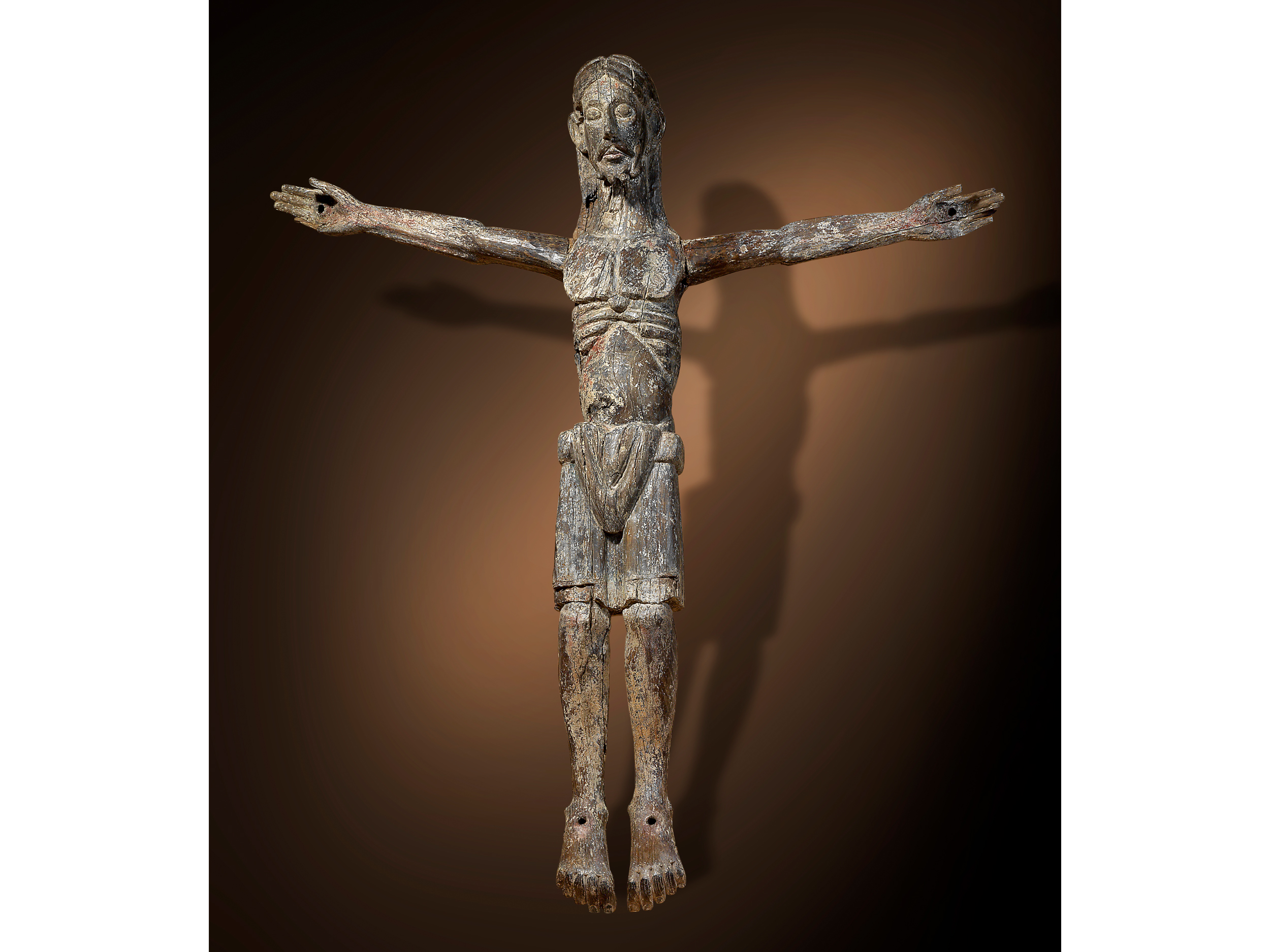
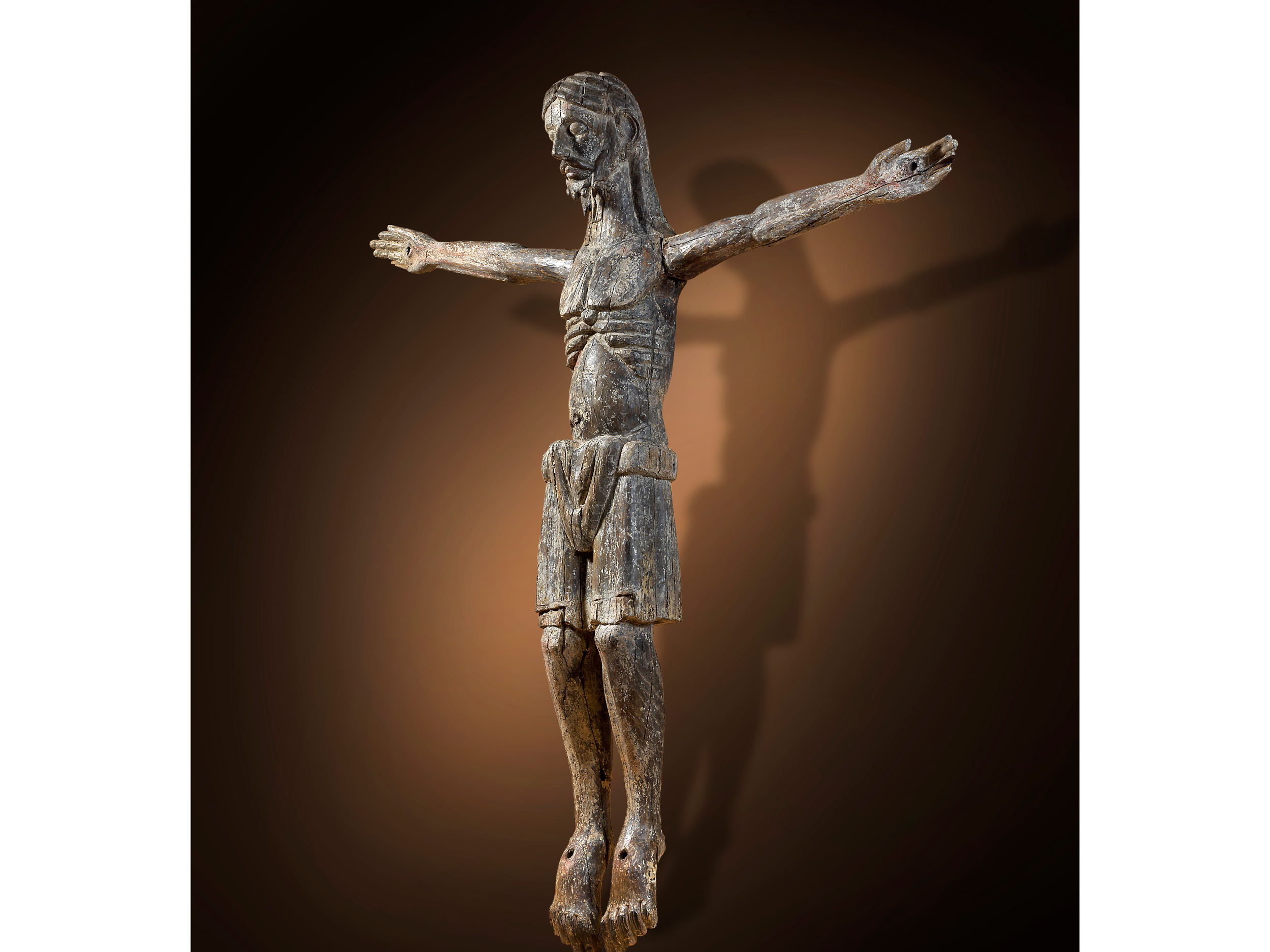
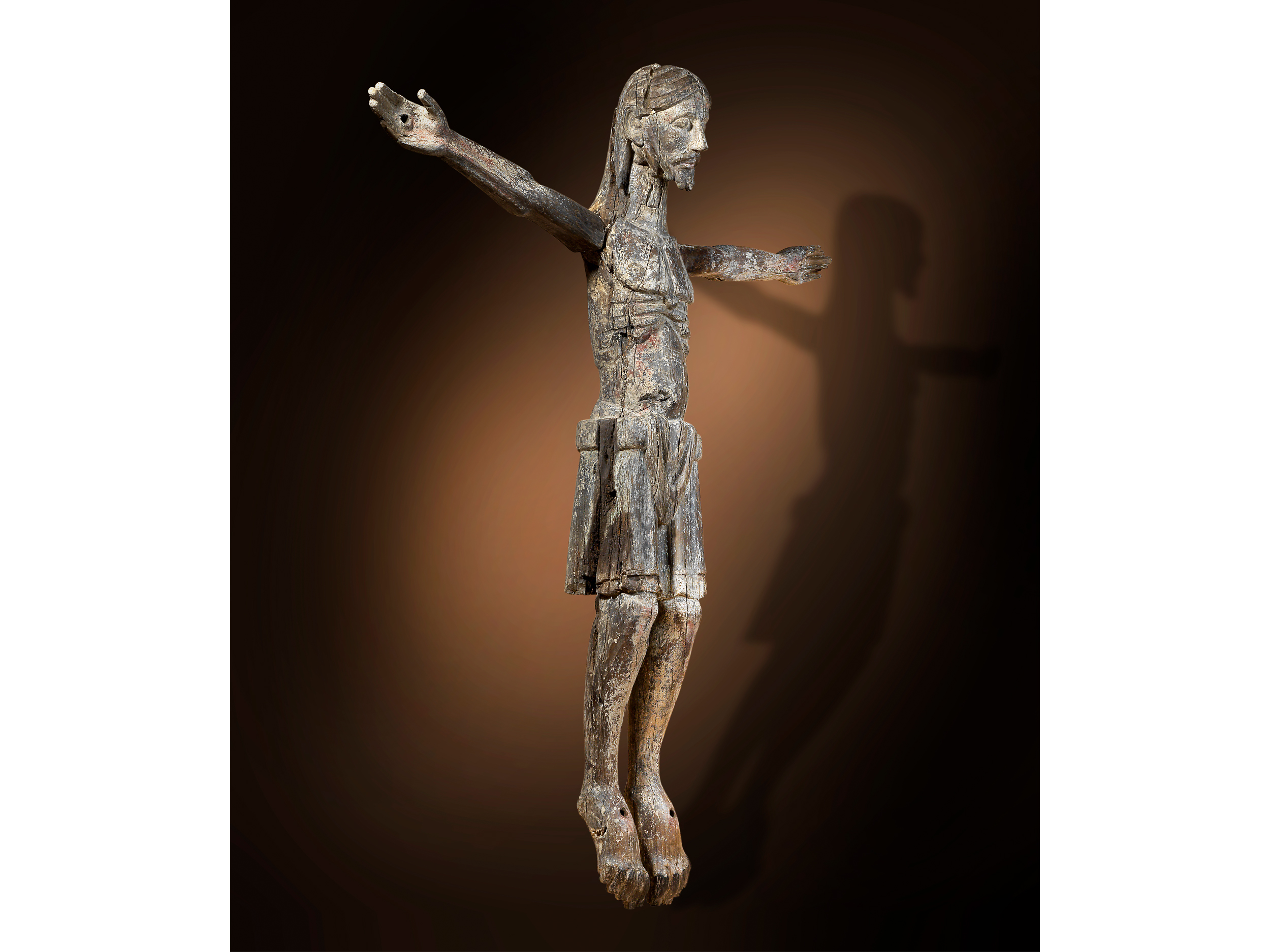
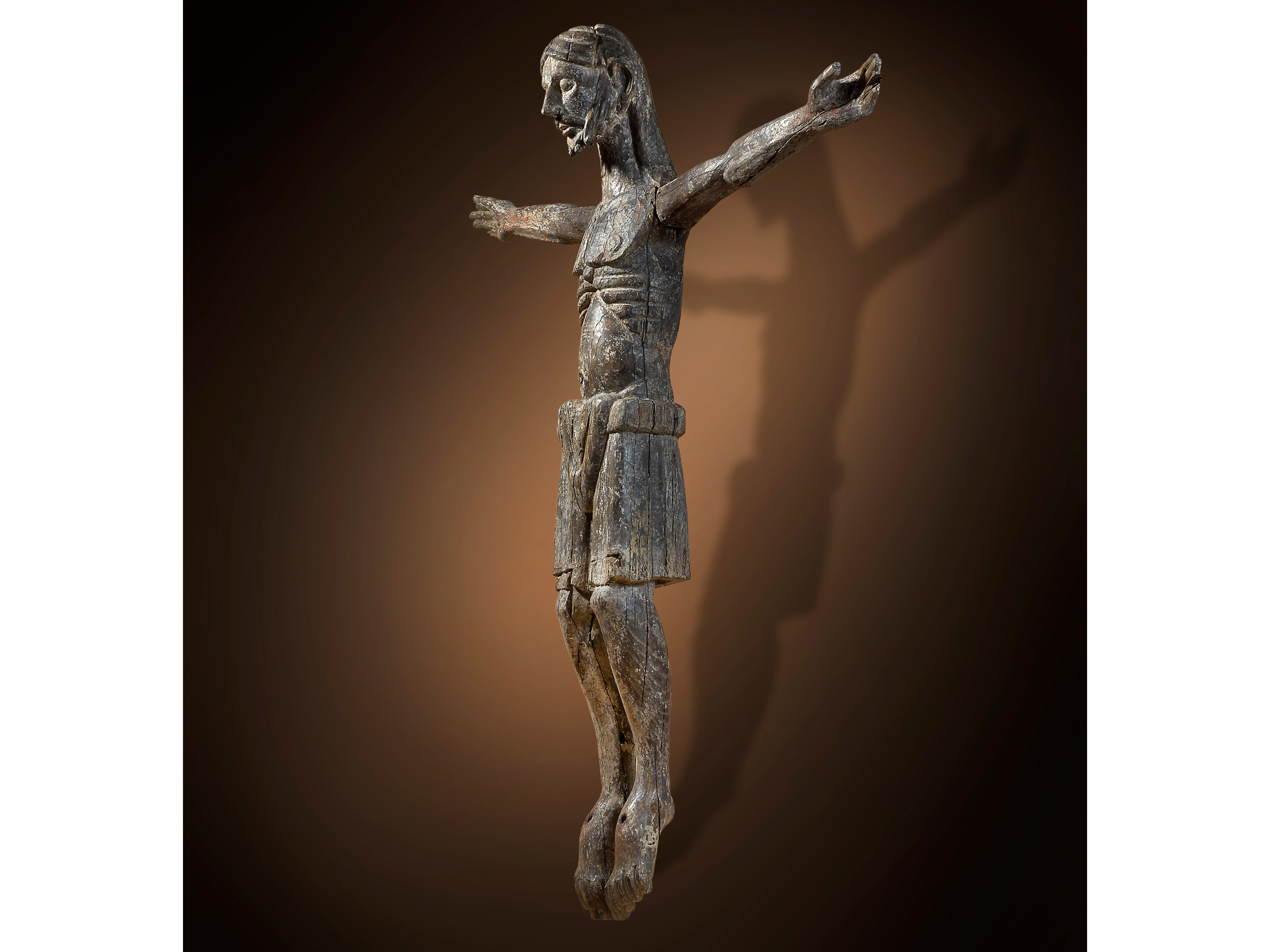
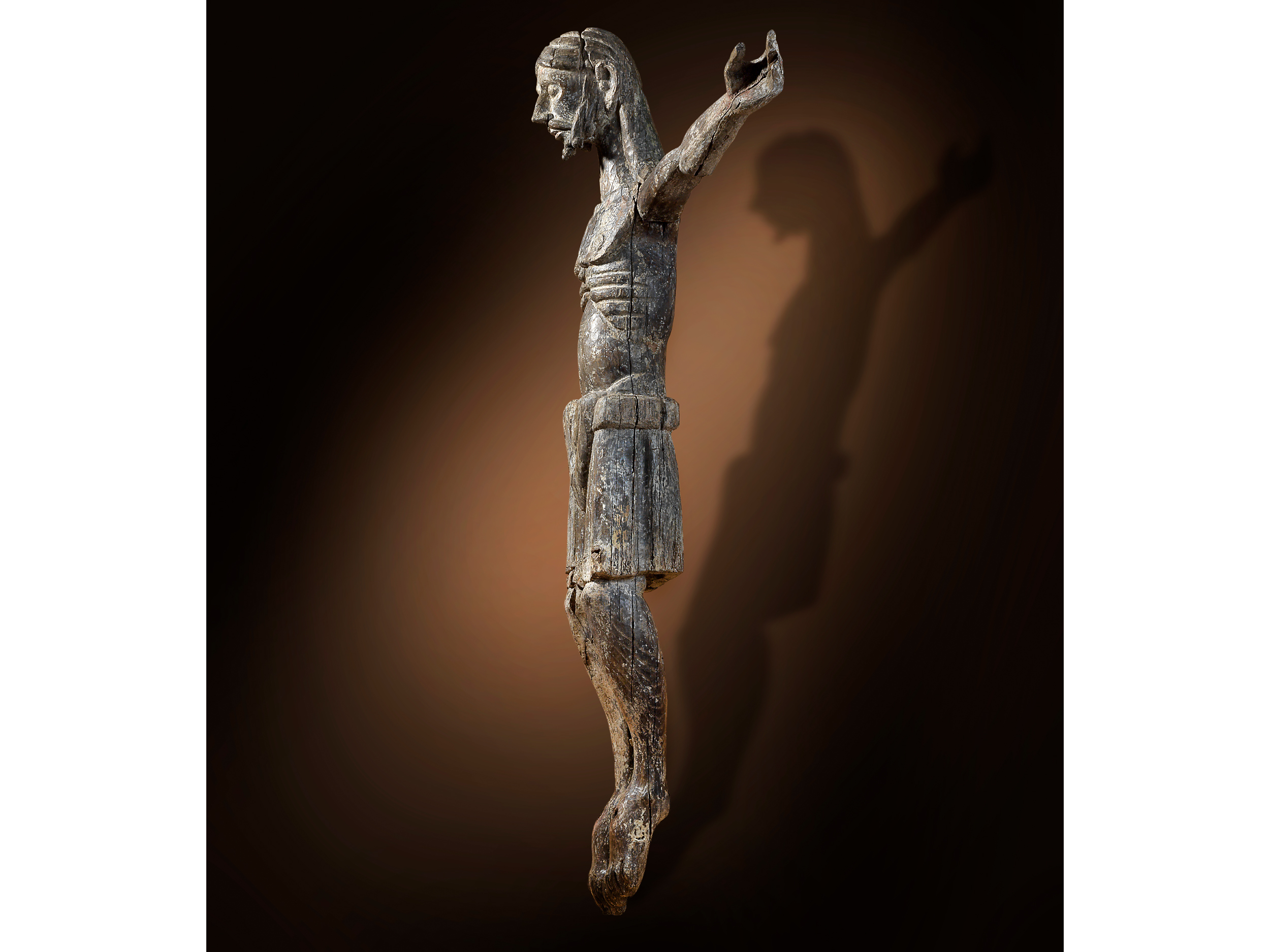
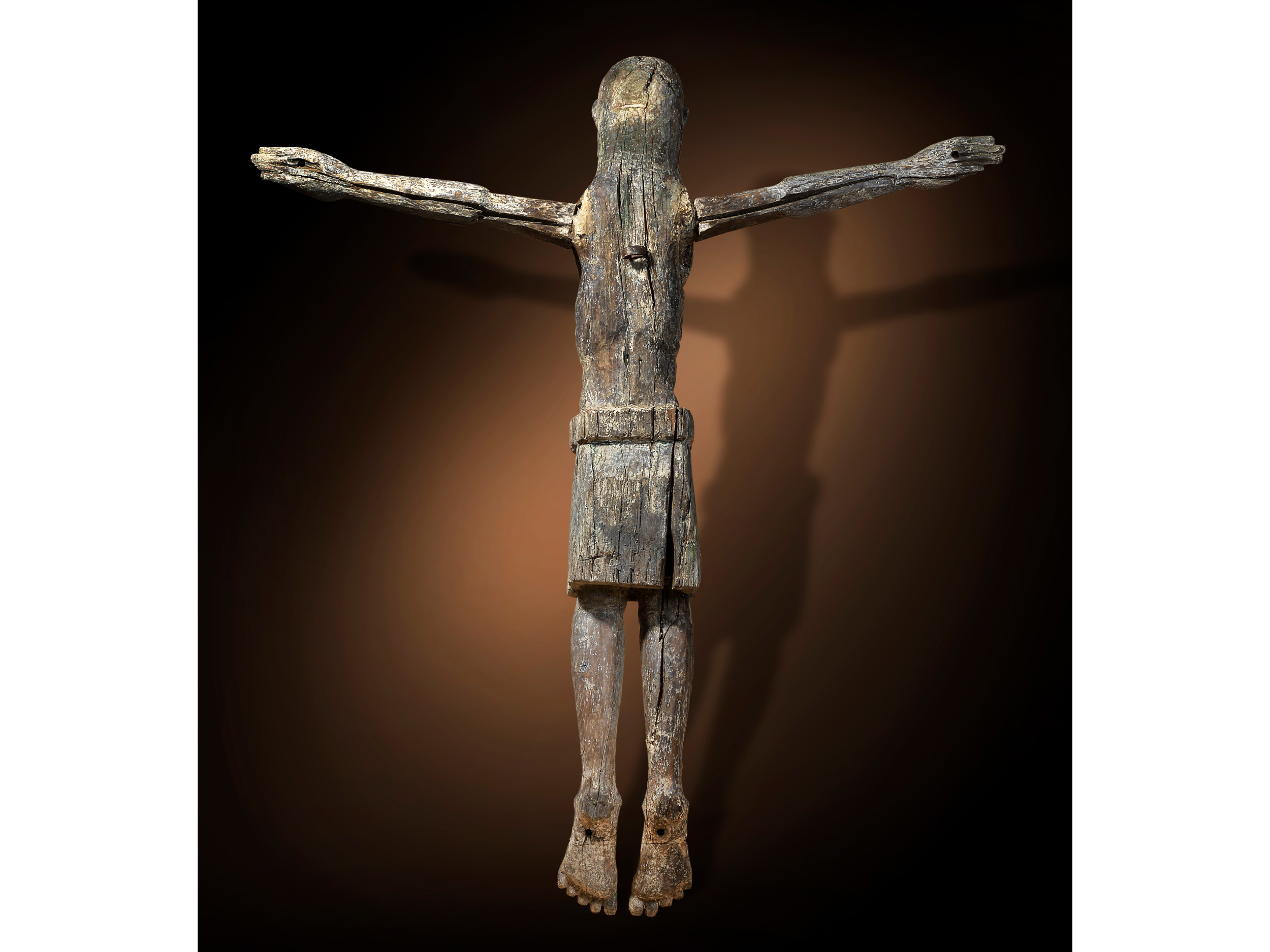
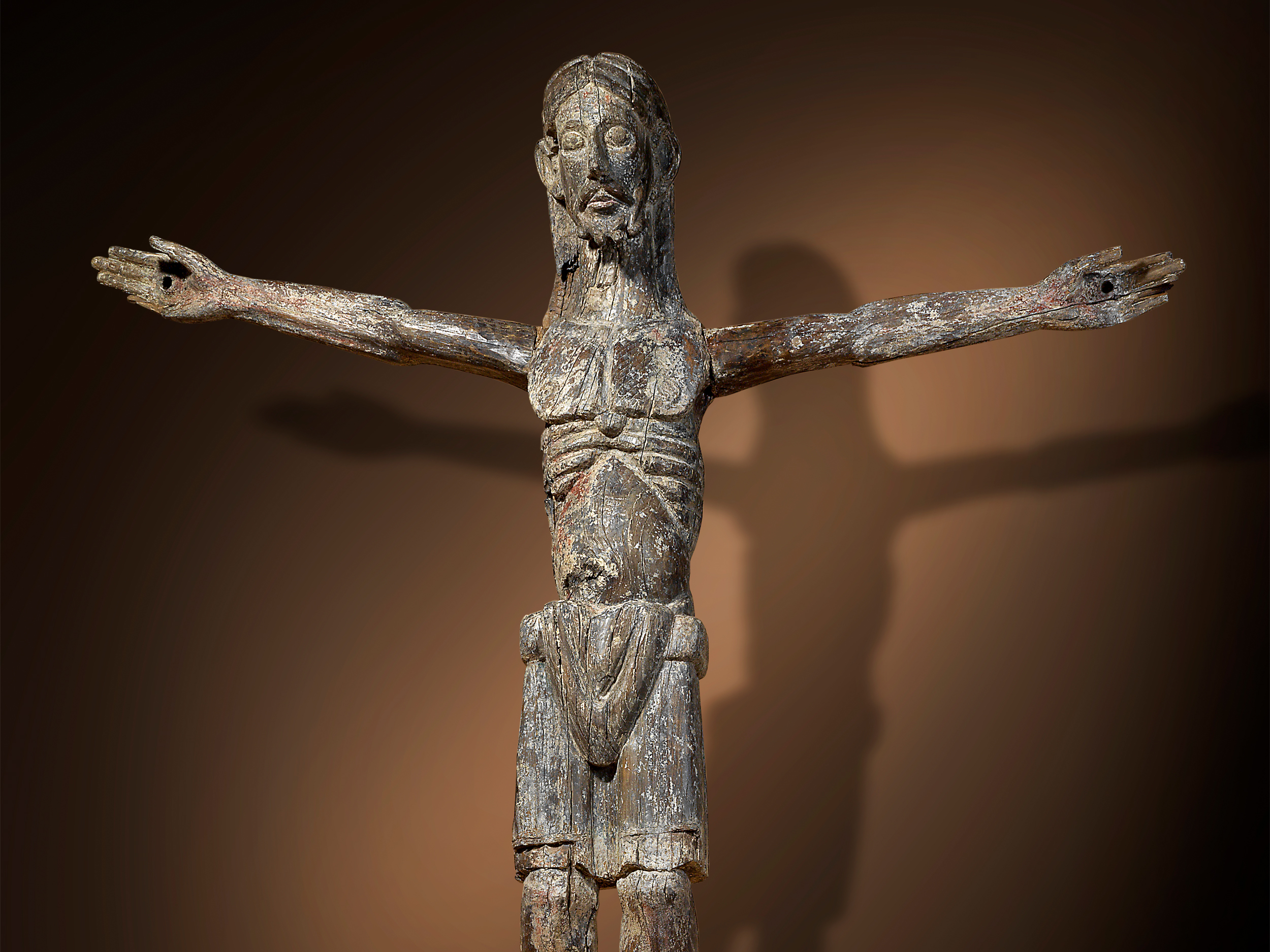
This monumental museum-quality crucifix (110 x 98 cm) can be stylistically dated to between 1170 and 1190, and its origin can be traced to southeastern France. Only the arms are the result of later restorations around 1400 and are carved from chestnut wood, while the rest of the figure is made of oak. The condition of the figure of Christ is good for its age; traces of a chalk primer remain.
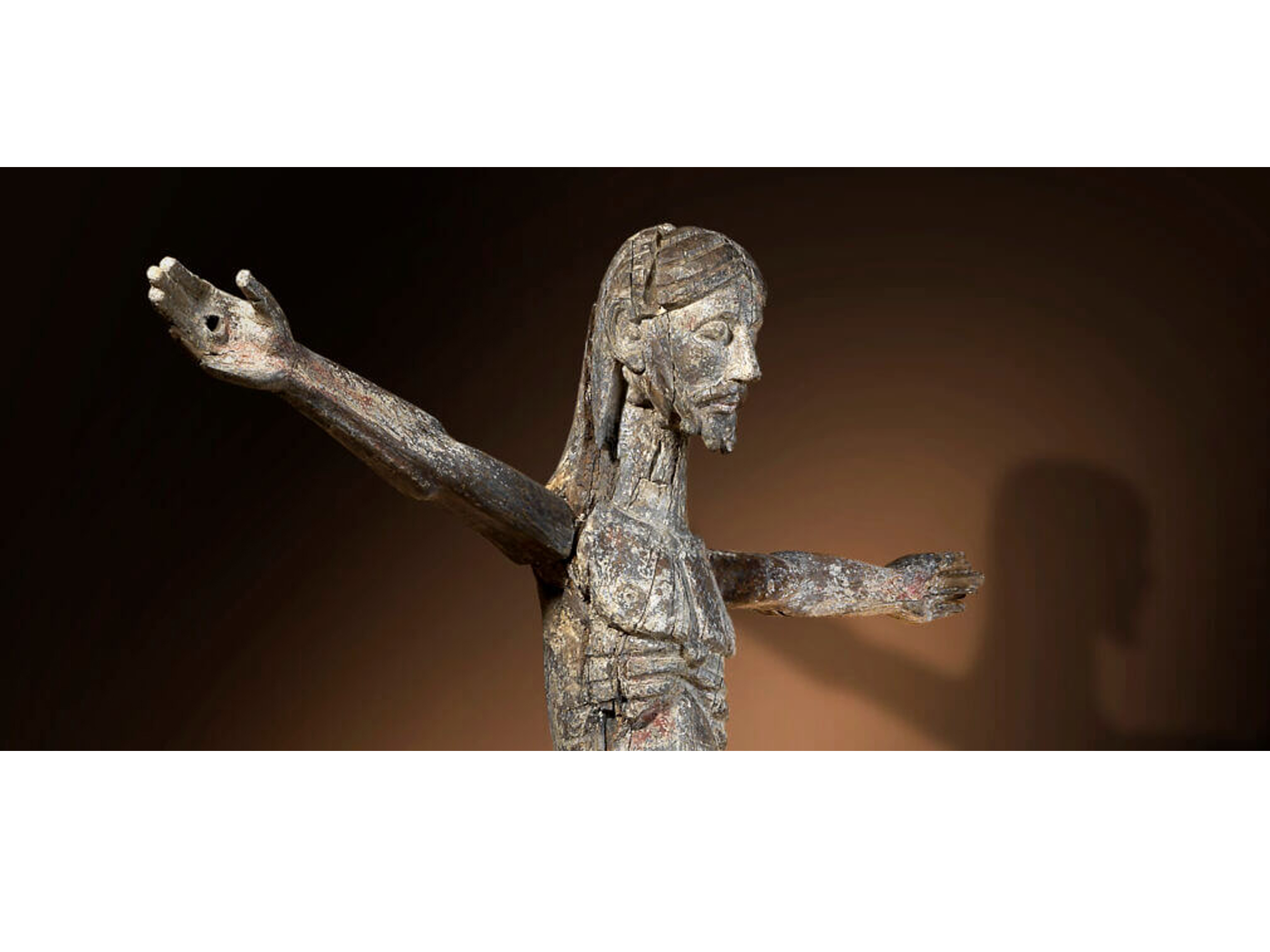
Particularly striking is the pronounced rigidity of the outstretched body, typical of early Romanesque figures. His calm yet intense expression is conveyed by his oversized eyes, set deep in their sockets and directed forward. Nevertheless, his gaze is slightly lowered and is emphasized by his prominent nose and large ears, which frame his face. His hair falls symmetrically onto his shoulders; the beard, sideburns, and mustache—which have grown together—end in artificial, volute-shaped curls. It should be noted that this striking physiognomy is due in particular to the elevated context in which the figure is displayed, as it was most likely designed to be viewed from below.
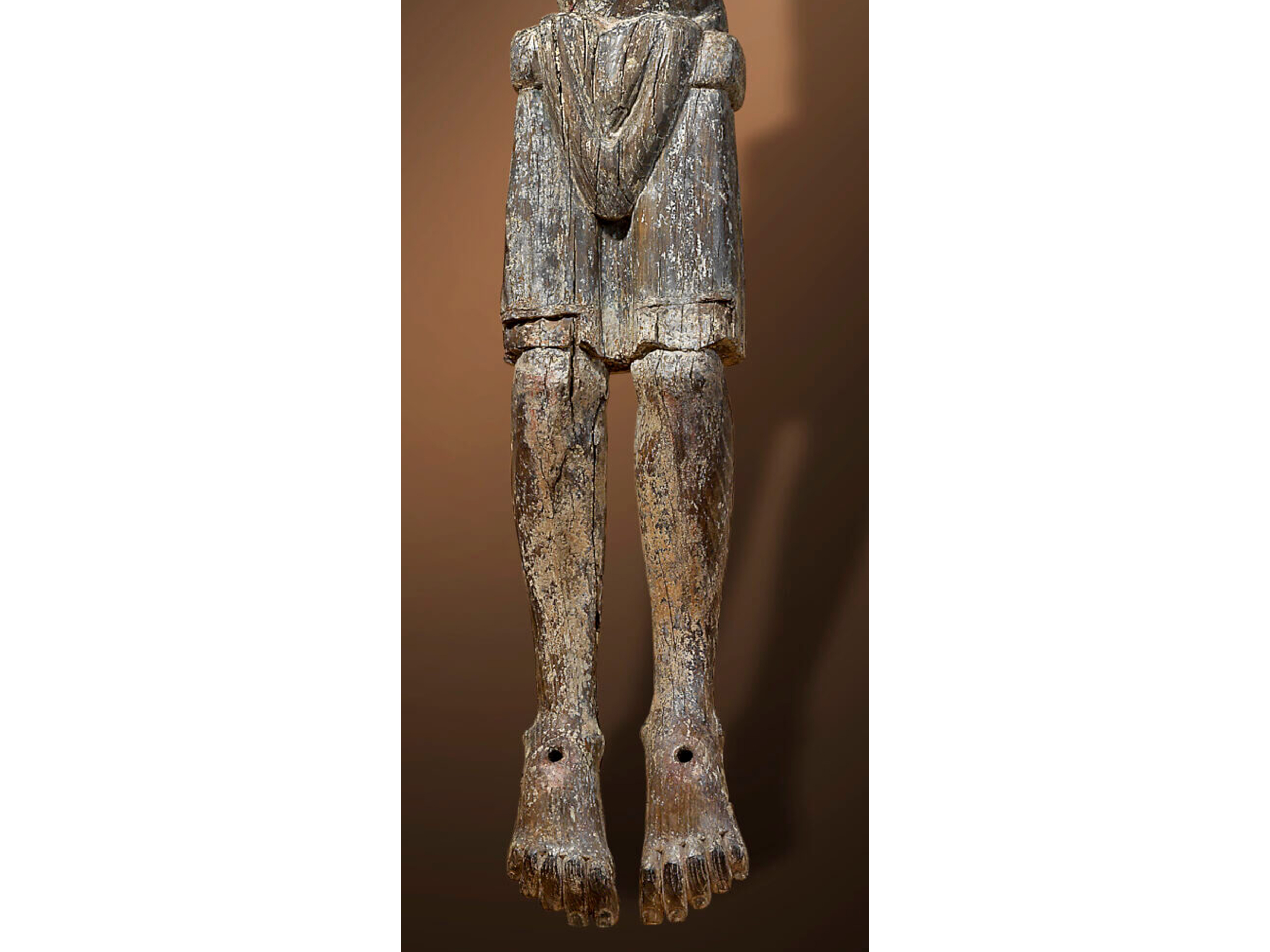
To emphasize Christ’s suffering on the cross, the emaciated chest—including the ribs and central sternum—is particularly well-defined. Furthermore, the oversized nipples convey an almost startling sense of nakedness. The sinewy arms and hands with elongated fingers—though added later—skillfully reflect the stylized torment. The distinct stigmata holes also indicate that the crucifix was fastened to a cross with large nails, presumably in the nave of a church, high above the heads of the faithful. The angular, block-like perizonium is particularly characteristic of the period before 1200 and skillfully balances the figure’s vertical lines. The V-shaped glabella, with its slight rounding, mirrors the proportions of Jesus’ face and bears a strong resemblance to an early 12th-century bronze crucifix from the Pays de la Loire (collection of Adolphe Stoclet), now in the British Museum (1965,0704.1). [1] The limp, drooping legs visible below, with larger-than-average feet whose toes are curled like claws in agony, contribute to the harrowing and dramatic overall appearance.
Although this unique, phenomenally well-preserved crucifix depicts a tortured body, Christ triumphs over death, symbolized by the suffering yet idealized representation in a majestic, upright posture with wide-open eyes.
[1] https://www.britishmuseum.org/collection/object/H_1965-0704-1.