Apotropaic Devil Figure
TIBERIUS – DIRECTSALE
Selling price
€ 44.800
Apotropaic Devil Figure
Romanesque
South Tyrol or Graubünden
12th/13th century
Carved from pine wood
Original version
Height 151 cm
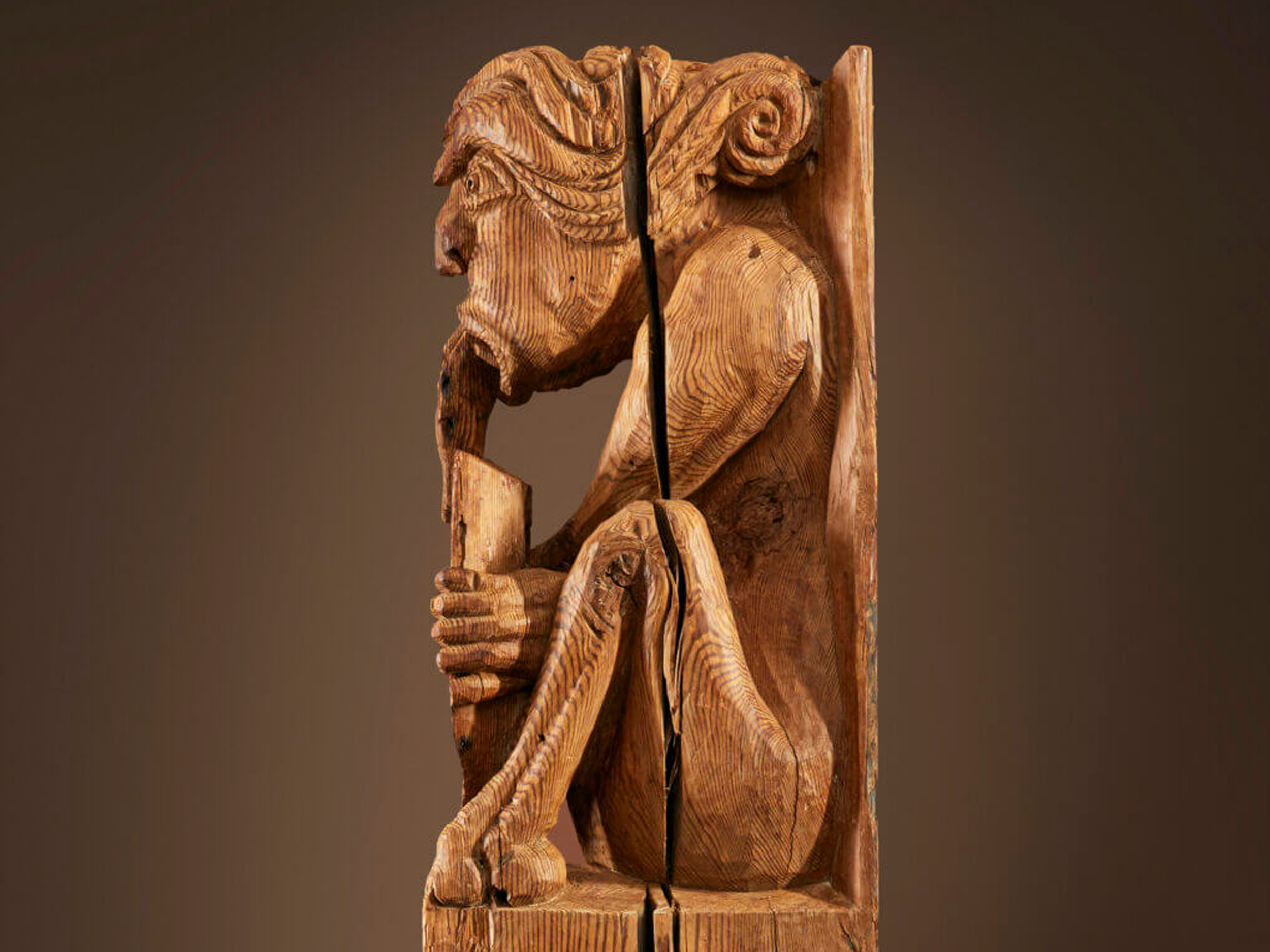
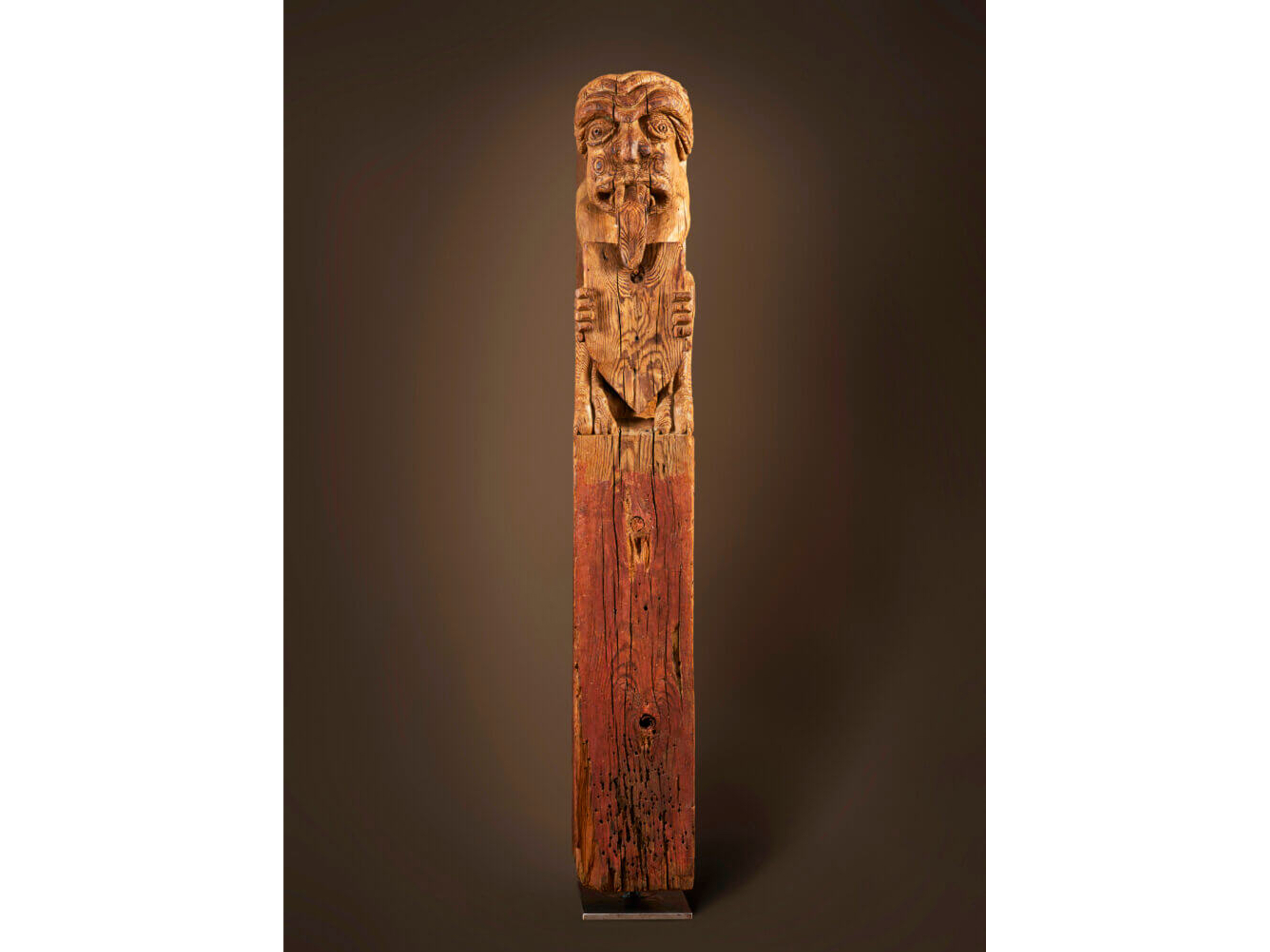
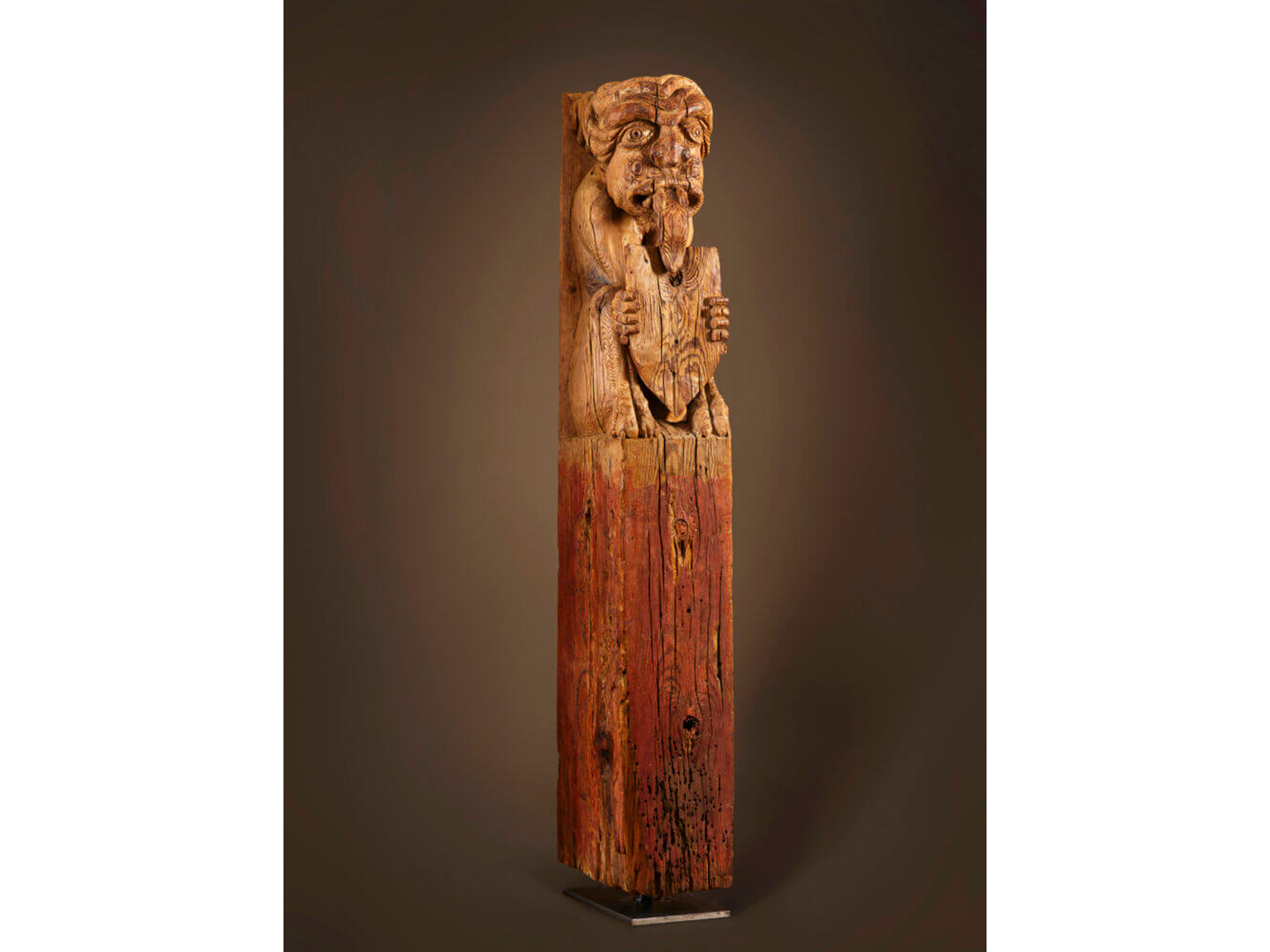
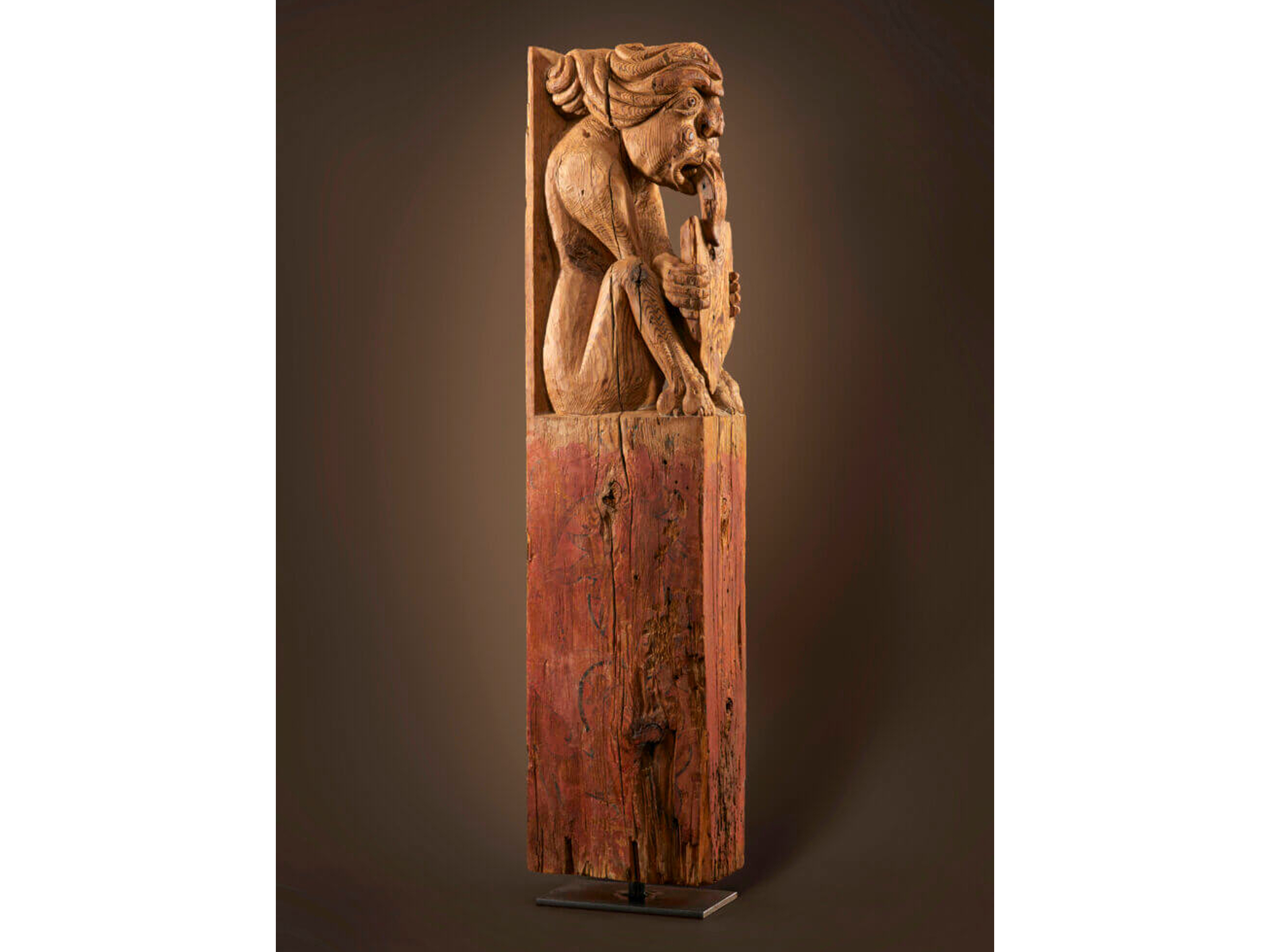
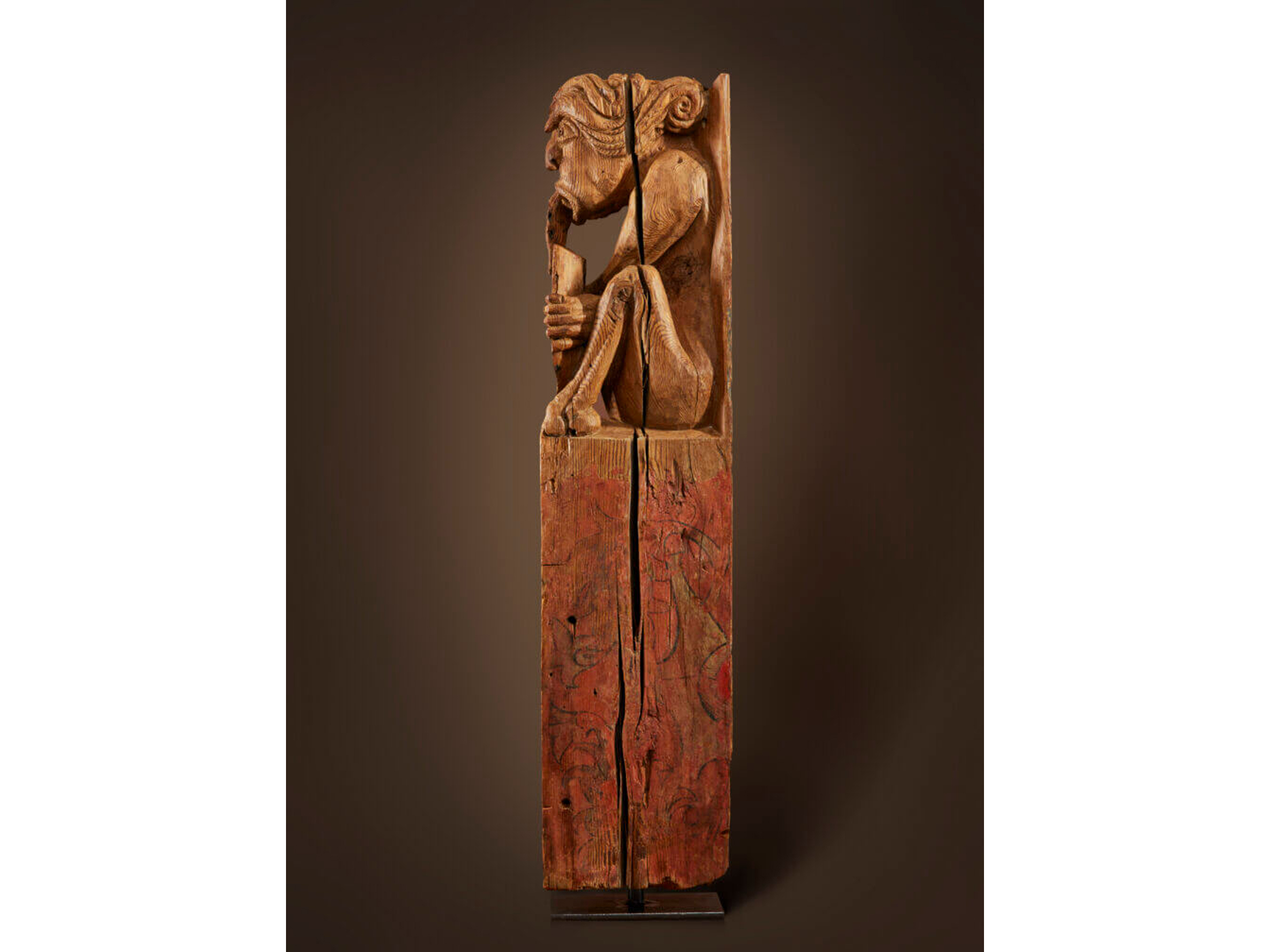
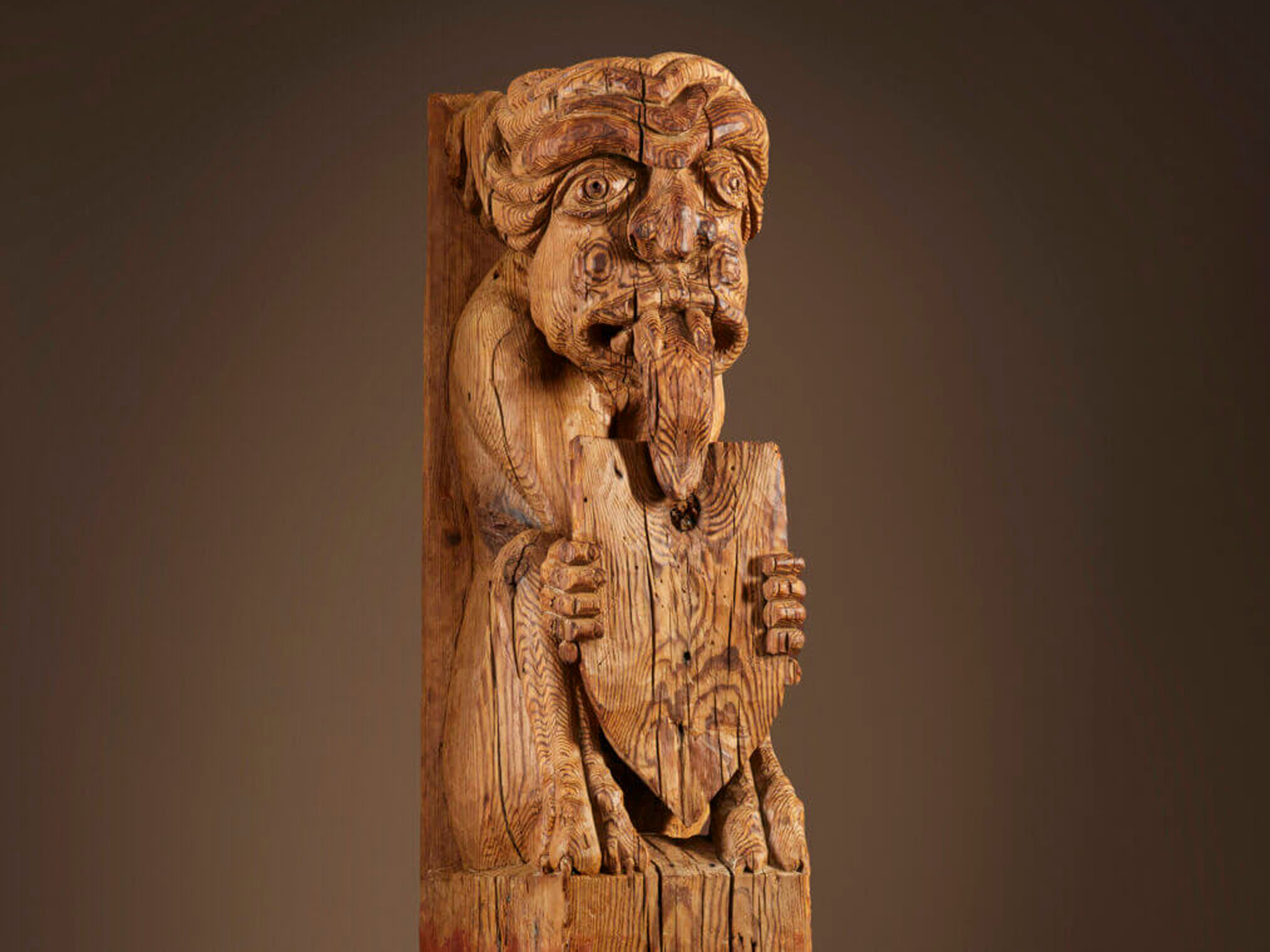
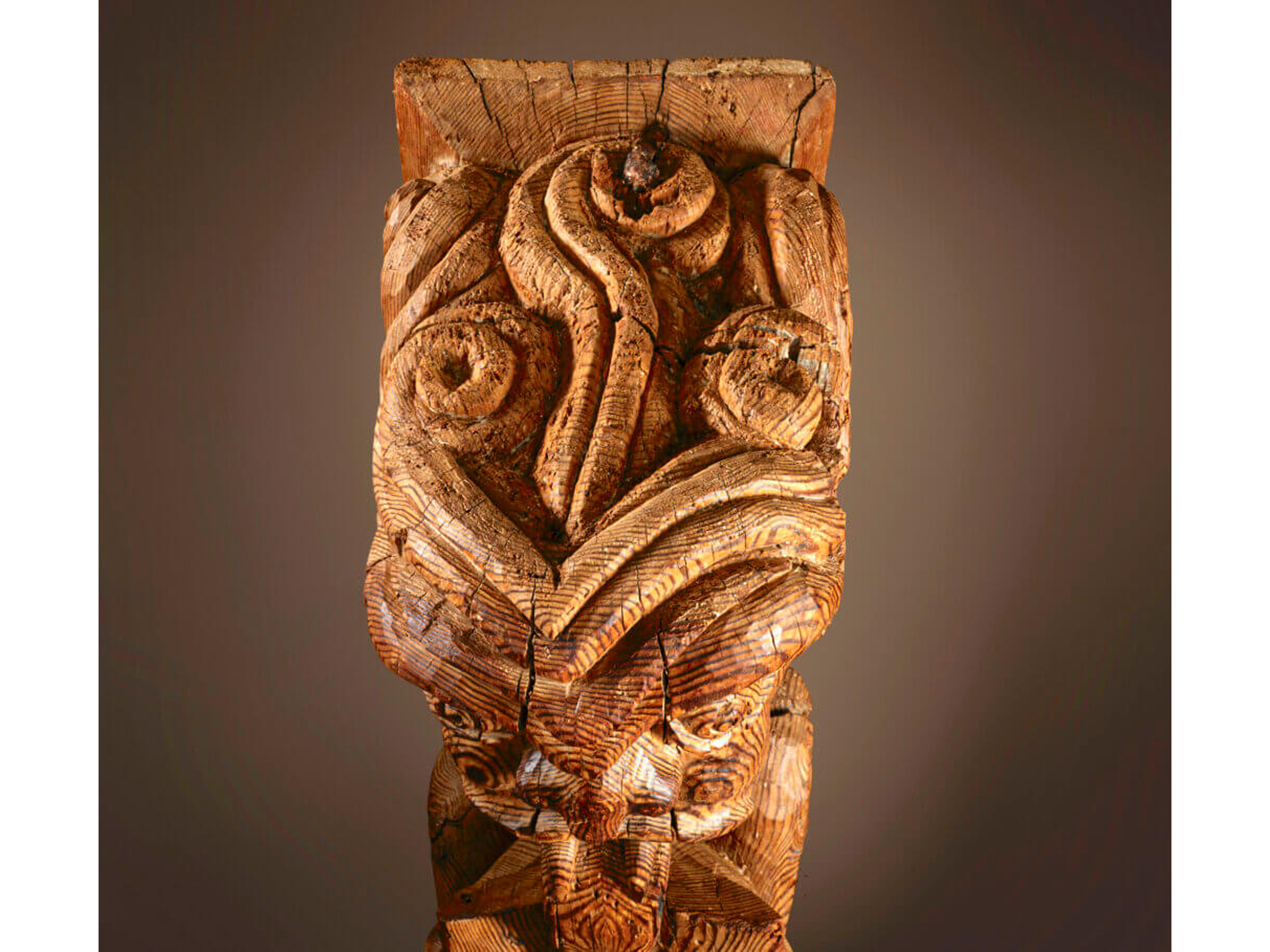
This unique figure is a demonic, devil-like figure carved from a section of a long pine beam (length 151 cm). This object likely represented an architectural element of a wooden ceiling, either in a castle, a fortress, or a town hall. Stylistically, this Alpine figure can be attributed to the region from Graubünden to South Tyrol and dates to around 1120–50. Of particular note are the remnants of the figure’s original polychrome paint.
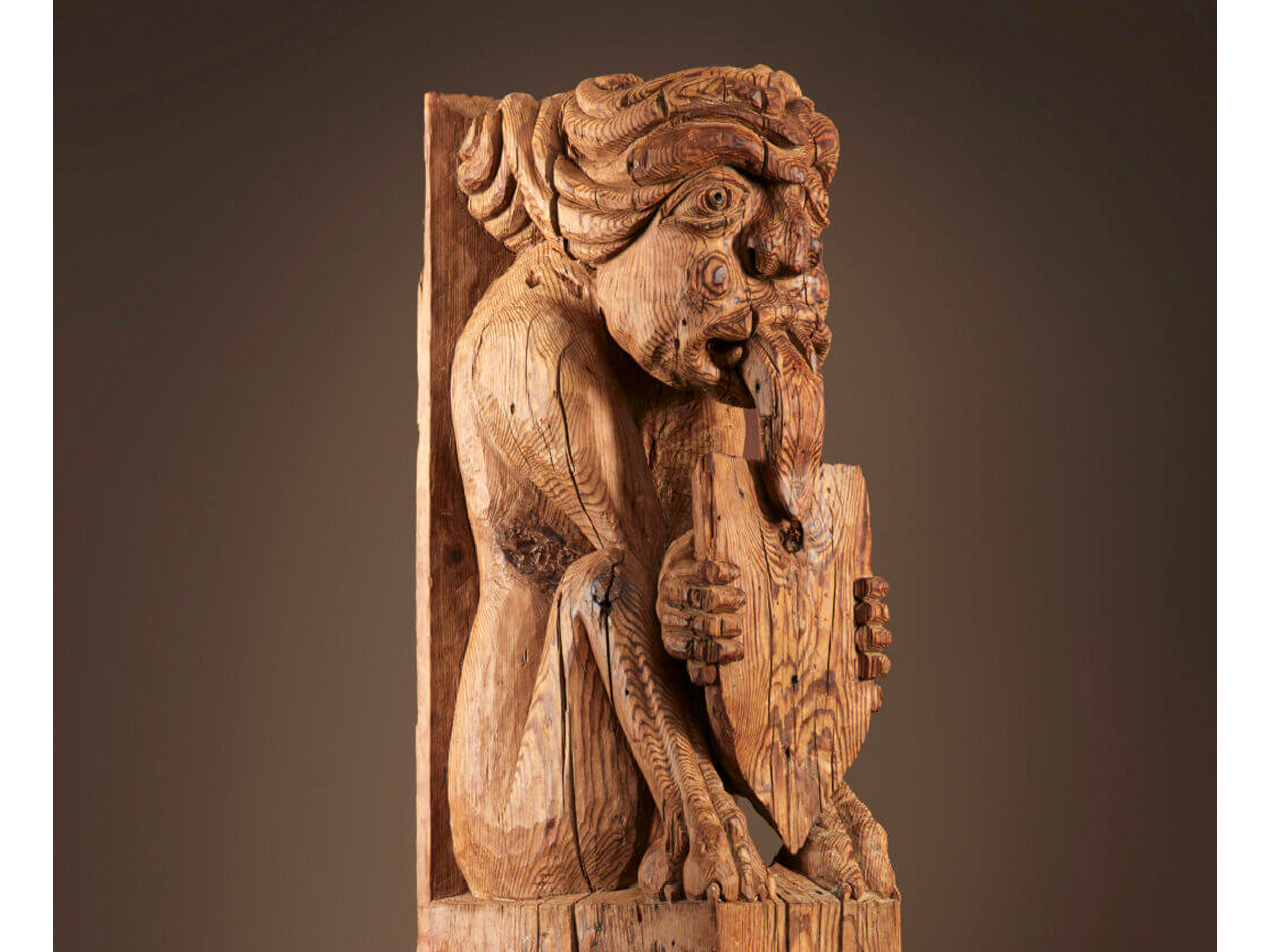
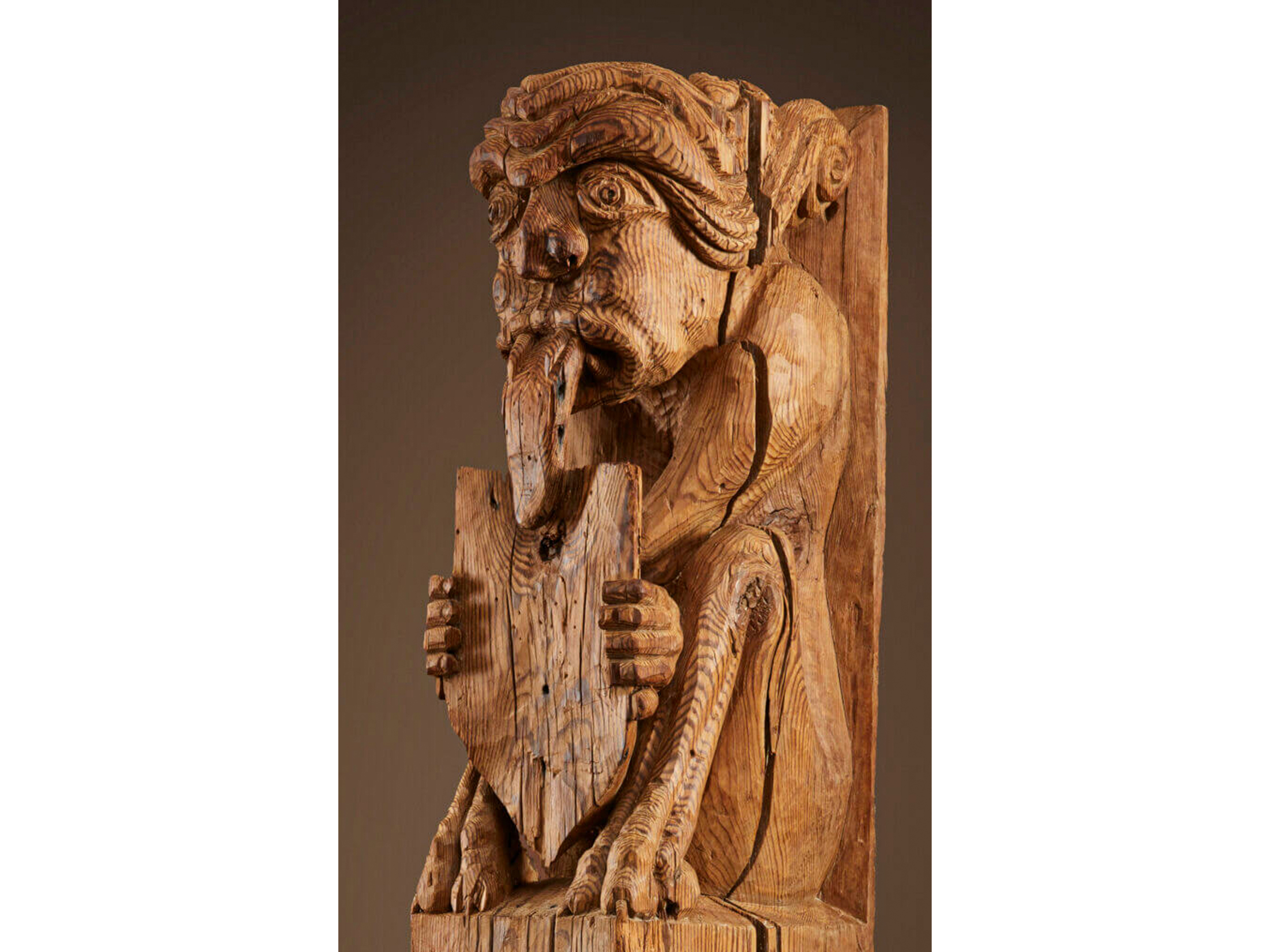
As the embodiment of evil, the devil is depicted either as a single figure or as part of a group of demonic figures. The Bible itself contains no description of the devil; therefore, it was up to the woodcarvers to invent suitable physiognomic features. Typical is the blending of characteristics from pagan, Greco-Roman gods, such as the goat’s feet or paws and the ram’s horns of the god Pan. Distinctive features of the Romanesque style include the drastically widened eyes, the low-set eyebrows, and the thick head of hair, which curls into a horn in an abstract manner. Other physiognomic, almost animalistic details include the thick, bulbous nose and the oversized mouth with pointed teeth and a long, extended tongue that touches the coat-of-arms-shaped shield held by the demon. The crouching figure of the devil, depicted in a strong frontal pose, presents the shield in front of its body, suggesting the representative function of heraldry. This is a unique depiction of the synthesis of heraldic and apotropaic functions.
Such fearsome figures have an apotropaic—that is, evil-warding—effect and thus serve to protect the building. This explains why buildings were decorated with such motifs, for example in the form of gargoyles on cathedrals. This figure now serves a dual function: protection and the display of a family coat of arms—presumably that of the family that commissioned the building for which this devil figure was originally intended. Particularly striking are the figure’s facial expressions and its protruding tongue. The Bible attaches great significance to the tongue as a symbol of speech, since it manifests a powerful voice or a deity. In connection with Medusa, another apotropaic figure, it alludes to an all-devouring hunger. In the case of the devil, the protruding tongue can also be interpreted as a sexual innuendo. This motif has been known since the 11th century as an attribute of the devil, associated with fear, blasphemy, and sin—which in turn are linked to the demonic realm.
It likely also serves as a warning to the viewer, as it can be seen as a visual sign of speech. Here, however, this motif is used playfully to draw attention to the coat of arms, which was almost certainly originally painted with the patron’s heraldic symbols.
Depictions of sinners being devoured by the devil can be found in architectural sculpture at St. Peter’s Church in Chauvigny, dating from the 11th/12th century. Here, the naked sinner sticks out his tongue and is swallowed by a lion-like creature that holds the mortal down with two of its paws. This is comparable to the following Bible verse: “Be sober and vigilant! Your adversary, the devil, prowls around like a roaring lion, seeking someone to devour.” (1 Peter 5:8). A figure of the devil with similar physical features and a protruding tongue can be found on the Princes’ Portal in Bamberg (c. 1230). Additional demon figures can be found on the tympanum of the west facade of the 12th-century monastery church of Sainte-Foy in Conques. An example of a crouching figure is the pair of figures on either side of the rose window of the Romanesque portal of the Chiesa dei Santi Giovanni e Reparata in Lucca, also dating from the 12th century. Another unique example of a devil serving a functional purpose is the demon Asmodeus, who carries a holy water font, in the Church of Sainte Marie-Madeleine in Rennes-le-Château, which was consecrated in 1059.
This very early, museum-quality object is an extremely rare architectural element in magnificent condition that can be attributed to the so-called “Alpine Romanesque Route,” which consists of nearly three dozen Romanesque cultural sites between South Tyrol and Graubünden. Among other places, similar depictions of mythical creatures or monsters can be found at the entrance to the castle chapel at Tyrol Castle, which was built between 1125 and 1140 and was the former seat of the Counts of Tyrol.
I hereby place a purchase order for the exhibit listed below at the purchase price stated below.
Login
Login
Bid form
With this purchase order, I authorize TIBERIUS AUCTIONS to bid in my name and on my account up to the specified purchase limits or to contact me for a telephone bid during the auction.
Subscribe to our newsletter to be informed about upcoming auctions.